 Kinyarwanda
 English
 Swahili
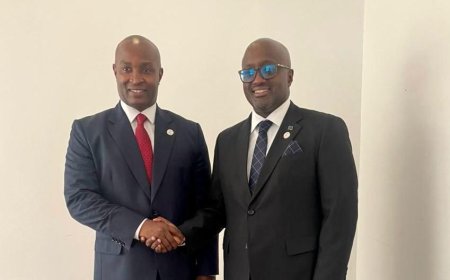
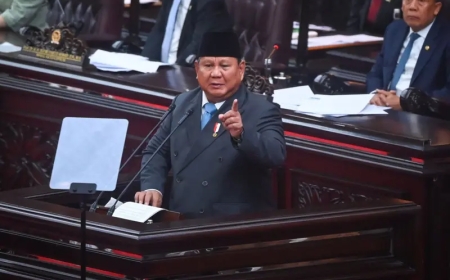













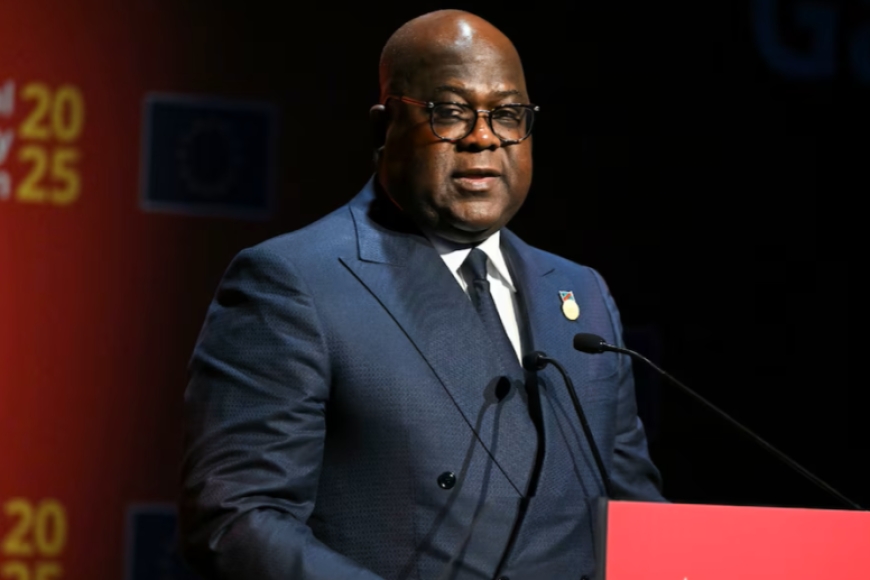
Tshisekedi’s Political Theater in Brussels: Rhetoric, Hypocrisy, and the Weaponization of Lies

At the Brussels Forum, President Tshisekedi portrayed himself as a man of peace while rewriting history, shifting blame, and reinforcing a narrative built on duplicity and scapegoating Rwanda.

The President of the Democratic Republic of Congo has once again seized an international platform this time the prestigious stage of Brussels to offer the world a spectacle marked by a striking dissonance , bringing to life the old saying: “Ridicule never killed anyone.”
In a carefully choreographed display blending theatrical posturing, political hypocrisy, and calculated manipulation, President Félix Tshisekedi proclaimed himself a “man of peace.” With a single speech, he attempted to erase a history of aggressive statements, including past threats to invade Rwanda and overthrow its legitimate government.
This opportunistic reversal is not an isolated occurrence it has become a recurring pattern in Congolese presidential rhetoric: after issuing threats, Tshisekedi plays the victim, portraying himself before the international community as the innocent target of a conflict in which he is, in fact, a central instigator.
Behind this carefully constructed victimhood lies a methodical duplicity that undermines regional stability while diverting attention from domestic political failures. The so-called “olive branch” extended to neighboring states is little more than a rhetorical smokescreen covering indirect acts of war a cynical strategy designed to sustain conflict while feigning moral high ground.
The reality behind this supposed peace is unmistakable. It is embodied in the arming and integration of the FDLR, a genocidal force responsible for some of the most heinous crimes in the region. It is reflected in tolerance and complicity with criminal militias guilty of ethnic persecution, systematic atrocities, and unspeakable barbarism, including the burning alive of civilians solely based on their community identity.
It is also evident in the deliberate denial of the Congolese identity of the M23, a convenient subterfuge that allows Tshisekedi’s government to evade political responsibility for a crisis rooted in the dysfunctions of its own state.
This double game extends to diplomacy: on one hand, endless appeals for international assistance on every stage and in every capital; on the other, a deliberate policy of sabotaging any meaningful peace initiatives that could lead to a sustainable resolution of the conflict.
To this is added the use of foreign mercenaries in military operations destined to fail proof of the strategic bankruptcy of a regime unwilling to acknowledge its own defeats. In this political theater , Rwanda is cast as the scapegoat, accused of being the source of every ill in a country hollowed out by its own leadership, where corruption, impunity, and the looting of national resources flourish under the protection of entrenched oligarchic circles.
What emerges is a well-oiled machine of deception where repeated lies stand in for foreign policy, and the art of distraction replaces responsible governance. While Tshisekedi’s speeches are wrapped in moralistic language, facts remain stubborn and unchanging.
Rwanda is not the source of Congo’s instability. The real engine of chaos lies in a political system that has chosen lies as a tool of survival and deflection as a substitute for accountability.
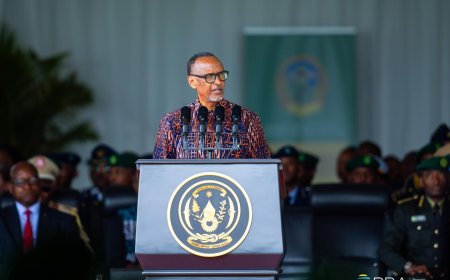
In this context, President Kagame’s words resonate with almost prophetic precision:
“It is useless to debate with those who have repeated their lies so many times that they have come to believe them.”
“No one needs to give Rwanda lessons on peace. Those of us who have fought for peace know its price.”
These are not merely rebuttals to unfounded accusations. They are warning against normalizing lies as instruments of power. History will not remember the emphatic declarations or theatrical performances will remember the undeniable truth of actions. In addition, that truth, today, lays bare a Congolese leadership trapped in its own contradictions, imprisoned by a fabricated narrative it has begun to believe.