issa
The Twilight of Western Democracy: A Civilizational Crisis Beyond Politics

The Twilight of Western Democracy: A Civilizational Crisis Beyond Politics

Oct 20, 2025 - 09:54
 0

Western representative democracy faces not just political decline but a deep civilizational crisis marked by identity loss, moral decay, and geopolitical upheavalsignaling the dawn of a post-Western era.


The slow decline of Western representative democracy cannot be reduced merely to a series of political mistakes or electoral failures; it stems from a profound civilizational crisisstructural, moral, and existential in nature.

The current democratic retreat across Europe is one of the clearest symptoms of an irreversible tectonic shift in the global configuration of power, values, and collective identity.

The golden age of liberal institutions once coincided with the rise of the nation-state, Western cultural dominance, and faith in linear progress. Yet this balance has collapsed under the dual pressure of uncontrolled flows of capital and information, which have undermined both the material and spiritual foundations of representative regimes.

These deterritorialized, elusive forces have eroded political sovereignty, fragmented public space, and transformed democracies into hollow administrative structures. Civic deliberation no longer governs societies; instead, the quiet dictatorship of markets and algorithms has taken its place.

The erosion of the rule of law does not simply stem from the incompetence of leadersit arises from a deeper decay of collective ethos.

The civic bond once woven from shared memory, common values, and a unifying narrative has unraveled under the combined blows of radical individualism, hyper-consumerism, and the loss of historical consciousness.

Rulers and citizens alike are trapped in sterile presentism, obsessed with the next election cycle, incapable of articulating long-term visions.

This crisis is particularly evident in a fragmented Europe where political division has reached unprecedented levels. Parties, drained of vitality and consumed by self-preservation, tear one another apart instead of forging meaningful alliances.

The crisis of Western representative democracy stems less from political missteps than from a profound civilizational breakdown structural, moral, and existential in nature.

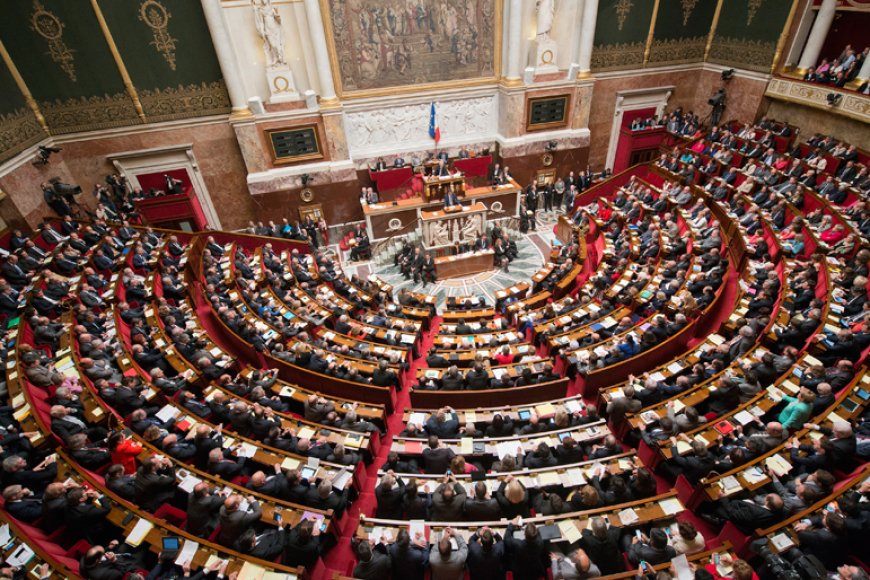
Parliamentary systems have become shadow theaterssuccession after succession of fragile governments, powerless to address the seismic geopolitical challenges of our time. This factional chaos echoes what Montesquieu observed in 17th-century republican England: where each faction suppresses only the other, political equilibrium vanishes, and the people, disoriented, lose sight of the democracy they once believed they were defending.

Yet institutional disorder merely mirrors a deeper malaise: the identity crisis gnawing at Western societies. The cultural foundation that once grounded national belongingGreco-Roman heritage, Christian humanism, Enlightenment rationalityhas cracked under centrifugal forces: irreversible identity pluralism, poorly integrated immigration, the rise of populism, and widespread disillusionment.

This spiritual void, which neither markets nor technology can fill, breeds a quiet anxiety, a generalized sense of disorientation, and a growing inability to build genuine community.

At the same time, the tectonic plates of the global order are shifting relentlessly: the rise of Asian powers, the assertiveness of the Global South, the relative decline of Europe and the United States, and the erosion of multilateralism.

The Westonce the organizing center of the worldnow discovers, with astonishment, that it is no longer the star around which others revolve, but merely one power among many: vulnerable, aging, hesitant. This historical transformation likely marks the dawn of a post-Western era, where the former center of the world becomes the periphery of History itself.

Thus unfolds the twilight of representative democracyswept away by a double tide: the internal erosion of its founding ethos and the external shock of global upheavals. The West, once an exporter of ideals and models, now finds itself laid bare: trapped in its contradictions, estranged from itself, and an impotent spectator of its own decline.

This is no longer a crisis of governanceit is a crisis of civilization. And in this slow descent into uncertainty, no political providence seems capable of reversing the course of the river.

Layla kamanzi Layla Kamanzi is a passionate journalist and creative writer with a keen eye for impactful storytelling. As a Journalism and Mass Communication student at Mount Kenya University, she is dedicated to using words as a tool to inform, inspire, and amplify the voices of everyday people. Driven by curiosity and a love for truth, Layla explores stories that shape communities and spark meaningful conversations. She enjoys blending facts with compelling narratives to create content that educates, empowers, and connects audiences across East Africa and beyond.
The Twilight of Western Democracy: A Civilizational Crisis Beyond Politics

Oct 20, 2025 - 09:54
Oct 20, 2025 - 11:54
 0
The Twilight of Western Democracy: A Civilizational Crisis Beyond Politics

Western representative democracy faces not just political decline but a deep civilizational crisis marked by identity loss, moral decay, and geopolitical upheavalsignaling the dawn of a post-Western era.


The slow decline of Western representative democracy cannot be reduced merely to a series of political mistakes or electoral failures; it stems from a profound civilizational crisisstructural, moral, and existential in nature.

The current democratic retreat across Europe is one of the clearest symptoms of an irreversible tectonic shift in the global configuration of power, values, and collective identity.

The golden age of liberal institutions once coincided with the rise of the nation-state, Western cultural dominance, and faith in linear progress. Yet this balance has collapsed under the dual pressure of uncontrolled flows of capital and information, which have undermined both the material and spiritual foundations of representative regimes.

These deterritorialized, elusive forces have eroded political sovereignty, fragmented public space, and transformed democracies into hollow administrative structures. Civic deliberation no longer governs societies; instead, the quiet dictatorship of markets and algorithms has taken its place.

The erosion of the rule of law does not simply stem from the incompetence of leadersit arises from a deeper decay of collective ethos.

The civic bond once woven from shared memory, common values, and a unifying narrative has unraveled under the combined blows of radical individualism, hyper-consumerism, and the loss of historical consciousness.

Rulers and citizens alike are trapped in sterile presentism, obsessed with the next election cycle, incapable of articulating long-term visions.

This crisis is particularly evident in a fragmented Europe where political division has reached unprecedented levels. Parties, drained of vitality and consumed by self-preservation, tear one another apart instead of forging meaningful alliances.
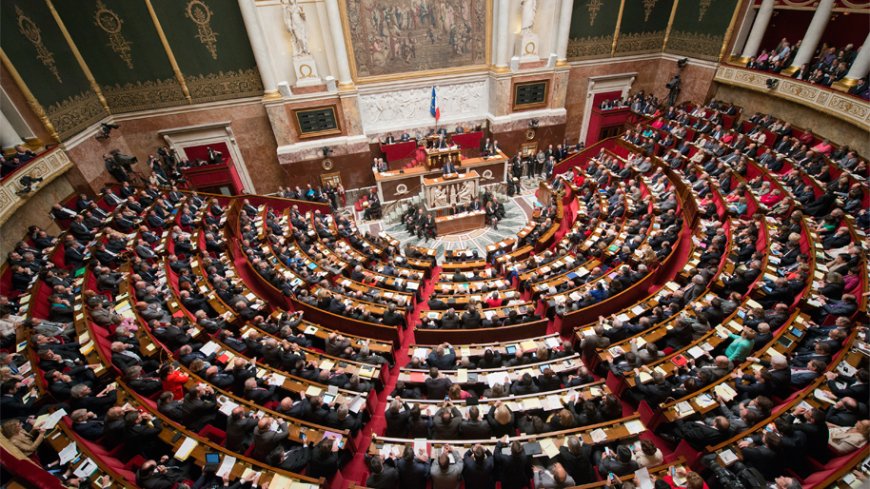
The crisis of Western representative democracy stems less from political missteps than from a profound civilizational breakdown structural, moral, and existential in nature.

Parliamentary systems have become shadow theaterssuccession after succession of fragile governments, powerless to address the seismic geopolitical challenges of our time. This factional chaos echoes what Montesquieu observed in 17th-century republican England: where each faction suppresses only the other, political equilibrium vanishes, and the people, disoriented, lose sight of the democracy they once believed they were defending.

Yet institutional disorder merely mirrors a deeper malaise: the identity crisis gnawing at Western societies. The cultural foundation that once grounded national belongingGreco-Roman heritage, Christian humanism, Enlightenment rationalityhas cracked under centrifugal forces: irreversible identity pluralism, poorly integrated immigration, the rise of populism, and widespread disillusionment.

This spiritual void, which neither markets nor technology can fill, breeds a quiet anxiety, a generalized sense of disorientation, and a growing inability to build genuine community.

At the same time, the tectonic plates of the global order are shifting relentlessly: the rise of Asian powers, the assertiveness of the Global South, the relative decline of Europe and the United States, and the erosion of multilateralism.

The Westonce the organizing center of the worldnow discovers, with astonishment, that it is no longer the star around which others revolve, but merely one power among many: vulnerable, aging, hesitant. This historical transformation likely marks the dawn of a post-Western era, where the former center of the world becomes the periphery of History itself.

Thus unfolds the twilight of representative democracyswept away by a double tide: the internal erosion of its founding ethos and the external shock of global upheavals. The West, once an exporter of ideals and models, now finds itself laid bare: trapped in its contradictions, estranged from itself, and an impotent spectator of its own decline.

This is no longer a crisis of governanceit is a crisis of civilization. And in this slow descent into uncertainty, no political providence seems capable of reversing the course of the river.