 Kinyarwanda
 English
 Swahili














Minister Nduhungirehe Challenges Gérard Araud’s Assertions on the Great Lakes Crisis

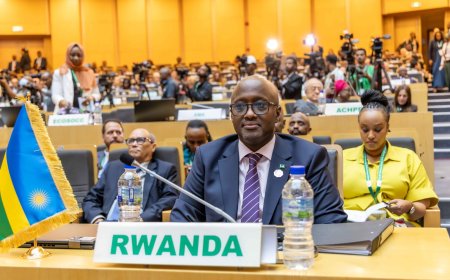
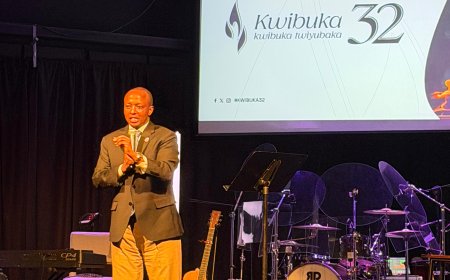
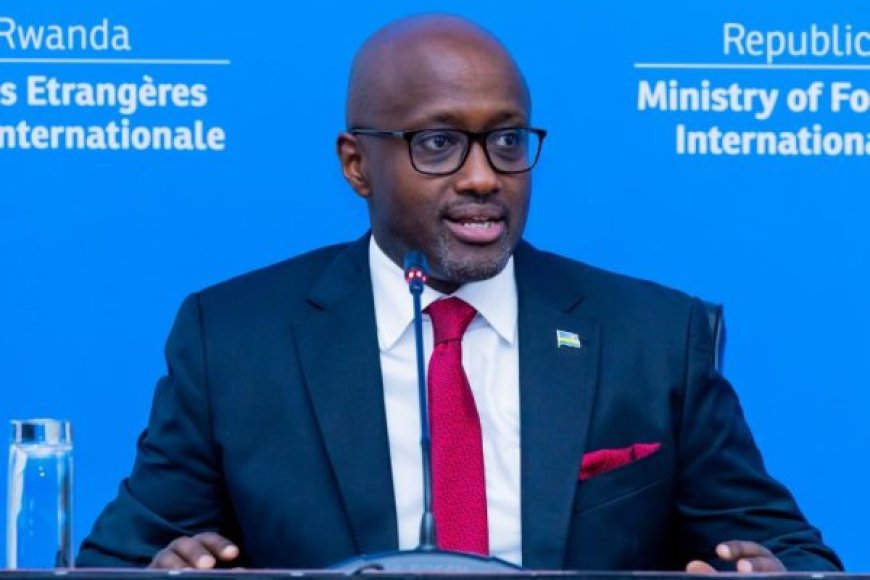
Rwanda’s Minister of Foreign Affairs and International Cooperation, Amb. Olivier Nduhungirehe, has issued a strong and comprehensive response to comments made by Gérard Araud, the former Permanent Representative of France to the United Nations, concerning the ongoing crisis in the Great Lakes region, particularly in eastern Democratic Republic of Congo (DRC).

In his detailed statement, Minister Nduhungirehe emphasized that his intervention was strictly focused on correcting factual inaccuracies and contextual omissions in Araud’s remarks. He noted that while a young participant in the debate could be excused for limited knowledge, “such an excuse cannot apply to a seasoned diplomat of Gérard Araud’s experience and stature.”
The Minister firmly rejected Araud’s claim that the AFC/M23 is an “instrument” manipulated by external actors.
He stressed that the movement is a Congolese political and military group, rooted in the struggle of a rwandophone Congolese community that has endured decades of marginalization and persecution since Congo’s independence.
He traced the origins of this crisis to the arbitrary colonial borders drawn in May 1910 by Belgium, Germany, and the United Kingdom.
Furthermore, he recalled that persecution intensified after July 1994 when genocidaires of the ex-FAR/Interahamwe transported, protected and installed in eastern Zaire by the French State entered the region heavily armed, setting off a chain of instability that persists to this day.
Minister Nduhungirehe described Araud’s accusations as “a simplistic and misleading media narrative” lacking factual basis.
He outlined four key facts:
- Rwanda possesses significant mineral resources, including the critical 3T minerals, located within the same geological formation as eastern DRC.
- The DRC mining sector is dominated by Western and Asian corporations, with no Rwandan companies appearing in the top 100 mining operators.
- Due to proximity, Rwanda like Uganda, Burundi, and Tanzania naturally serves as a transit route for minerals from eastern Congo to international markets.
- The real large-scale plunder is taking place in Haut-Katanga, where a $2-billion-a-year mining scheme is under judicial investigation in Belgium, involving actors linked to the Kinshasa–Brussels network, not Rwanda.
Responding to Araud’s assertion that Rwanda has deployed troops inside the DRC, Minister Nduhungirehe clarified that Rwanda’s actions are entirely defensive.
He explained that Rwanda has reinforced its border only in response to repeated attacks from the FDLR genocidal militia, which maintains active support from Kinshasa.
The Minister stressed that the FDLR’s continued presence is a direct legacy of Operation Turquoise, the controversial French-led military operation that protected and escorted genocidaires of the ex-FAR/Interahamwe into eastern Zaire with their weapons in 1994.
Given Araud’s long diplomatic career, Minister Nduhungirehe noted that he is “certainly fully aware” of the decisions and consequences associated with that operation.
A Call for Accuracy and Responsible Diplomacy
In his concluding remarks, Minister Nduhungirehe urged diplomats, analysts, and international observers to rely on factual, historical, and geopolitical accuracy when commenting on the region’s crises.
He argued that simplistic narratives not only mislead international audiences but also obscure the deeper colonial and political dynamics that continue to fuel instability in eastern DRC.
The Minister reaffirmed that Rwanda will continue to challenge misinformation and defend its national security interests against any distortion of the historical record.