 Kinyarwanda
 English
 Swahili




















M23 Crisis: How Félix Tshisekedi’s Propaganda Machine Led by Patrick Muyaya Is Collapsing Under the Weight of Its Own Lies

For over three years, President Félix Tshisekedi’s communication strategy, spearheaded by Information Minister Patrick Muyaya, has relied on propaganda and denial to mask the realities of the M23 rebellion. Today, that narrative is falling apart as contradictions, misinformation, and political theatrics expose a government losing both credibility and control.

For more than three years, the Congolese political scene has watched, powerless and blinded by its own illusions, a conflict that has laid bare the deep structural weaknesses of a government increasingly unable to listen or understand the realities surrounding it.
Since the March 23 Movement (M23) took up arms again to assert its right to Congolese nationality and its duty to protect its community, the government in Kinshasa has sunk into a victimhood narrative replacing action with rhetoric, strategy with gestures, and clarity with propaganda.
For informed observers, the M23 conflict has become a textbook example of political dissonance: on one side, a rebellion articulating a coherent message; on the other, a state responding only with outdated slogans, smear campaigns, and defensive communication more theatrical than diplomatic.
Unable to analyze the historical, community, and geopolitical dimensions of the crisis, Kinshasa has taken refuge in caricature and systematic demonization, labeling the M23 with every possible insult in a verbal frenzy that reveals more fear than strength.
Behind this faltering state machinery, a well-oiled propaganda network has turned deception into political capital. Manipulators and power courtiers have thrived, receiving hefty rewards from hidden hands to sustain a single, locked narrative. Costly communication operations have been staged like theatrical performances, designed solely to impose a distorted version of events on the world a narrative that today’s realities have relentlessly dismantled.
This state propaganda found echoes even in certain foreign embassies, NGOs, and international institutions which, through ignorance, opportunism, or political calculation, chose to play along. Prominent figures, once celebrated as champions of the Congolese cause, lent their voices to this masquerade often unaware of the damage it inflicted on the country’s credibility. Meanwhile, truth pushed to the margins of public discourse has been quietly eroding the edifice of illusions built by the regime.
Today, Félix Tshisekedi’s once formidable communication machinery has stalled. The official narrative, riddled with contradictions, no longer convinces anyone. The rhetoric of victimhood no longer generates sympathy. The Congolese state now endures events instead of anticipating them, reacts instead of acting, and complains instead of governing.
This reversal is not a mere accident it is the symptom of a sovereignty hollowed out from within by strategic emptiness, the triumph of communication over thought, and an obstinate refusal to face reality.
As the AFC/M23 consolidates its presence both on the ground and in the political space, the central government sinks deeper into institutional paralysis an echo chamber of its own making.
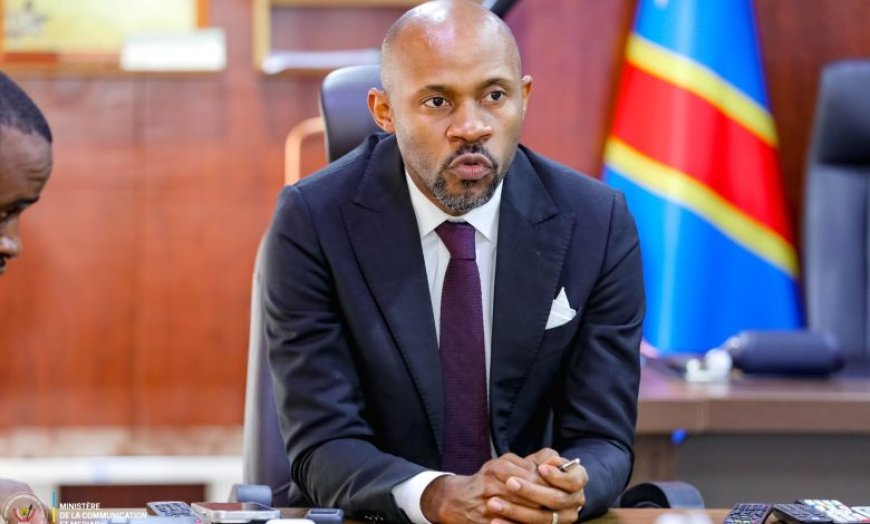
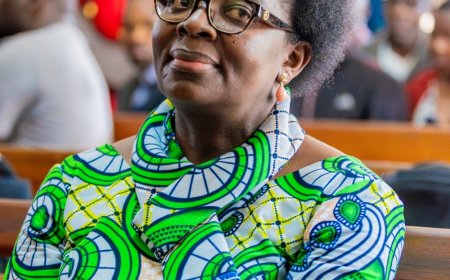
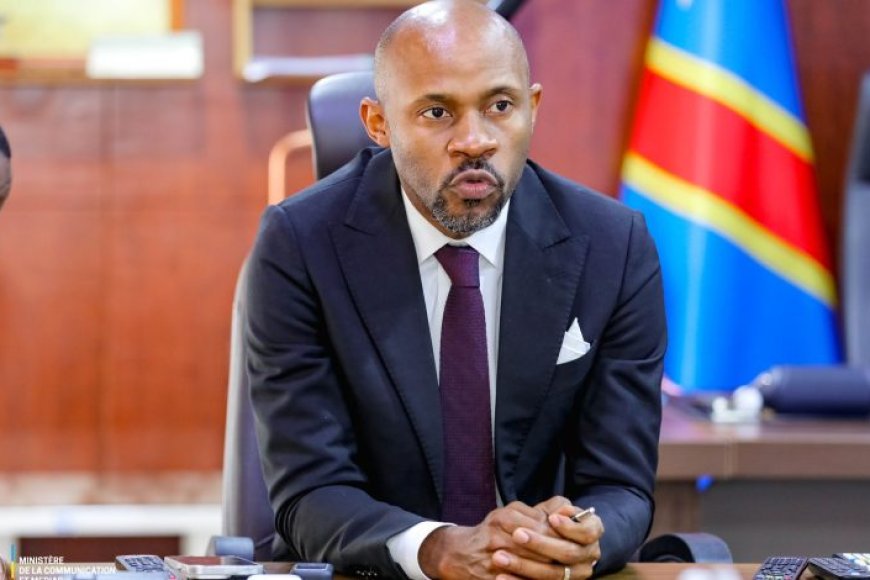
Patrick Muyaya Katembwe, Minister of Communication and Media of the Democratic Republic of the Congo (DRC).