 Kinyarwanda
 English
 Swahili











Joseph Kabila Returns to Politics with ‘Movement Sauvons la RDC’ in Nairobi as Opposition Unites Against Tshisekedi

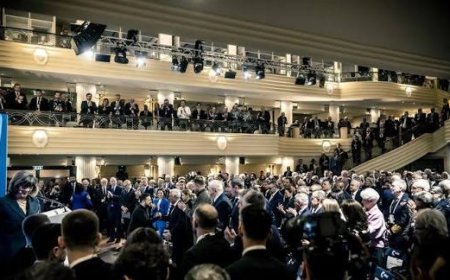
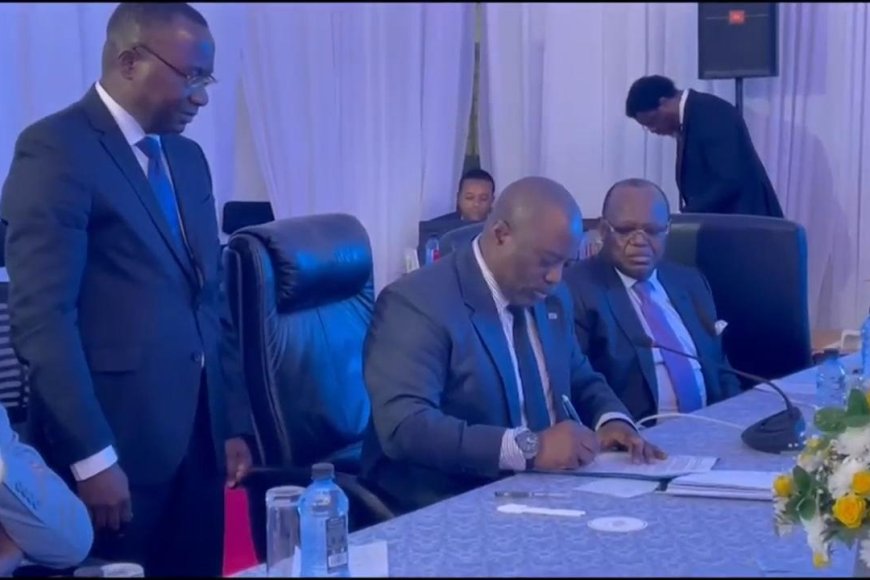
In Nairobi, between October 14 and 15, 2025, opposition leaders led by Joseph Kabila launched Movement Sauvons la RDC, a new coalition aimed at uniting Congolese voices for peace and reform. The alliance challenges President Félix Tshisekedi’s government and calls for inclusive national dialogue to restore stability in the Democratic Republic of Congo.

Former Congolese president Joseph Kabila has re-emerged on the political stage with a new coalition aimed at rescuing the Democratic Republic of Congo (DRC) from what he described as a deep national crisis. After ruling the country for 18 years, Kabila’s return has reignited debate over the future of Congolese politics and the growing discontent with President Félix Tshisekedi’s administration.
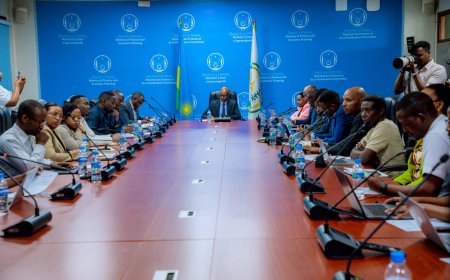
The new platform, called Movement Sauvons la RDC (Let’s Save the DRC), was launched in Nairobi, Kenya, following a two-day consultative meeting that brought together 15 prominent opposition figures. Kabila was unanimously chosen as the leader of the coalition. The founding members said their mission is to unite all Congolese across political, ethnic, and regional lines in order to “save the republic” and bring the country back to stability and democratic governance.
The launch comes at a politically sensitive moment. Only weeks earlier, a Congolese military court sentenced Kabila in absentia on charges that include treason and war crimes. His public appearance in Nairobi has therefore raised both domestic and regional interest, with many observers viewing the new alliance as a direct challenge to Tshisekedi’s rule.
During the Nairobi meeting, members of Movement Sauvons la RDC issued a joint statement calling for an inclusive national dialogue that brings together all Congolese voices, including civil society, opposition, and armed groups. They dismissed President Tshisekedi’s proposal for talks restricted to his political allies, saying that a genuine peace process must involve everyone affected by the conflict. The group also endorsed a peace initiative spearheaded by senior figures in the Catholic and Anglican Churches, urging the government to engage in honest, countrywide reconciliation.
The platform reaffirmed support for the 12-point proposal Kabila had presented earlier this year, a roadmap that includes ending authoritarianism, dismantling militias, expelling foreign armed groups, restoring democratic freedoms, and improving relations with neighboring states. Members said their immediate priority is to mobilize citizens, rebuild trust in institutions, and work toward the recovery of national sovereignty.
A correspondent from UkweliTimes attended the Nairobi gathering and spoke with several founding members. They explained that the movement’s goal is not simply to reclaim political power but to restore dignity, peace, and justice to the Congolese people. One senior member stressed that the DRC is “at a crossroads” and that the new platform represents “a call for unity and truth.”
The coalition’s emergence is expected to reshape the DRC’s political landscape. Analysts say it could test Tshisekedi’s grip on power and increase diplomatic friction between Kinshasa and Nairobi, which has hosted several Congolese opposition meetings. Others note that the initiative may also attract international attention, particularly from church-led and regional mediation efforts already involved in peacebuilding.
As the DRC continues to grapple with insecurity in the east, economic stagnation, and political polarization, Kabila’s re-entry into the arena adds a new dimension to the country’s uncertain trajectory. Whether Movement Sauvons la RDC will gain traction on the ground or remain largely symbolic remains to be seen, but for now, it marks the most significant realignment of opposition forces since Tshisekedi took power.
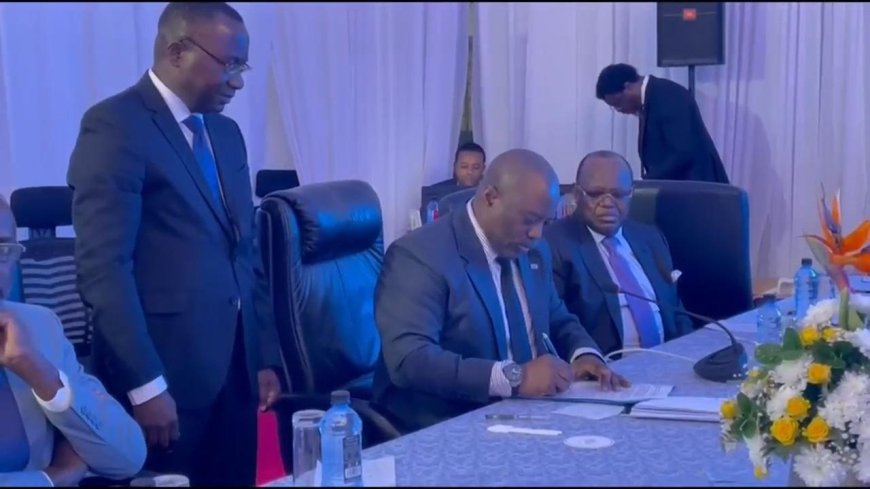
Former Congolese president Joseph Kabila has re-emerged on the political stage with a new coalition aimed at rescuing the Democratic Republic of Congo (DRC) from what he described as a deep national crisis. After ruling the country for 18 years, Kabila’s return has reignited debate over the future of Congolese politics and the growing discontent with President Félix Tshisekedi’s administration.