 Kinyarwanda
 English
 Swahili




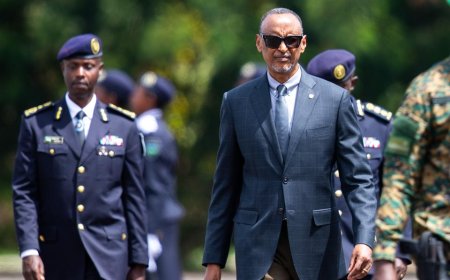







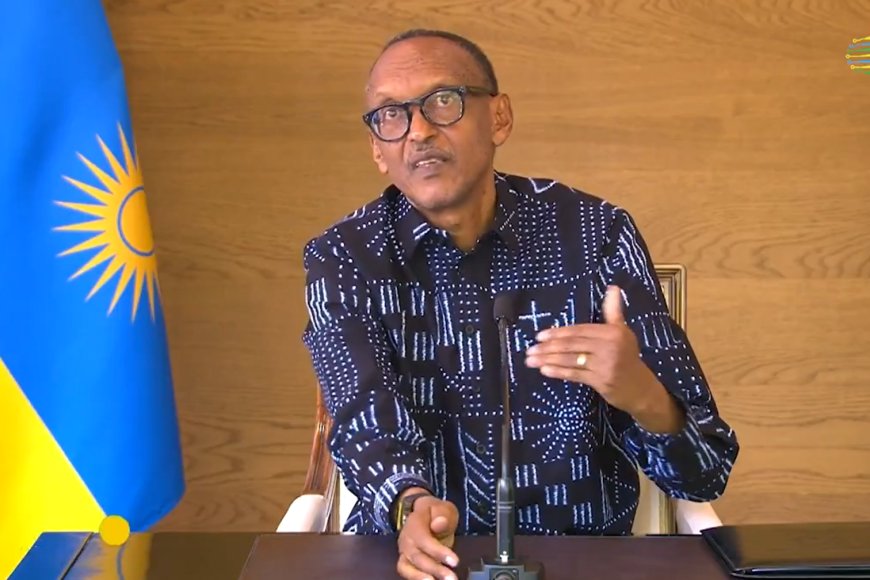
Kagame: Rwanda-DRC peace deal success depends on mutual trust and commitment; He expressed appreciation to the Trump administration
President Paul Kagame has emphasized that the success of the recent peace agreement between Rwanda and the Democratic Republic of Congo (DRC) relies not on international intervention but on the honest implementation of the deal by both nations.

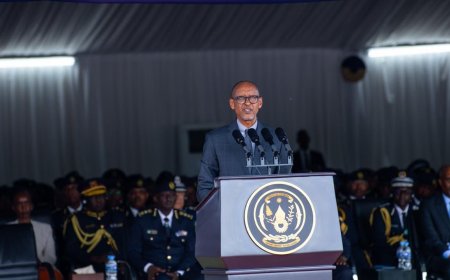
Speaking to the media on Rwanda’s Liberation Day, July 4, Kagame noted, “The agreement was reached in Washington, D.C., but its enforcement is the responsibility of Rwanda and the DRC—not the U.S.” He expressed cautious optimism, saying that resolving such conflicts requires cooperation and compromise from all involved.
“You can’t expect to get everything you want when multiple stakeholders are involved,” Kagame said, stressing that mutual concessions are necessary to achieve long-term stability.
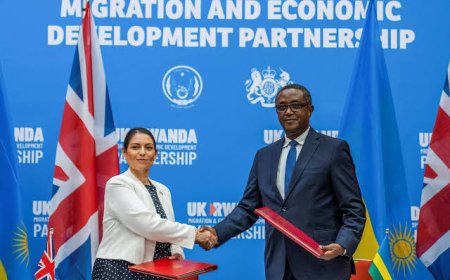
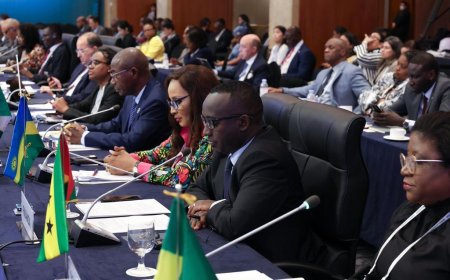
The peace deal, signed on June 27 with U.S. mediation, focuses on enhancing security in eastern DRC and jointly addressing the threat posed by the FDLR militia—a group Kigali sees as a continued danger along its border.
Kagame affirmed Rwanda’s commitment to the deal and urged the DRC to do its part, particularly in neutralizing the FDLR. “If the FDLR remains, the problem remains,” he warned, insisting that Rwanda would act if necessary to protect its national security.
He also stated that Rwanda has consistently honored its agreements, saying, “Rwanda has never failed to uphold what we’ve agreed to.”
Kagame outlined three key pillars of the peace deal: political, economic, and security aspects. He criticized simplified narratives that focus solely on the region’s mineral wealth, arguing that such views ignore the deeper, more complex roots of the conflict.
He praised the Trump administration’s broader perspective, which he said recognizes issues such as the exclusion of Kinyarwanda-speaking Congolese and other internal DRC challenges. He contrasted this with previous Western approaches that he characterized as narrow and ineffective.
Kagame also mentioned a separate Qatar-led peace initiative involving the DRC government and the M23 rebel group, calling it an important effort to address Congo’s internal issues—issues that he said are often wrongly portrayed as a bilateral problem with Rwanda.
“Congo tries to frame this as a Rwanda-DRC problem, but many of the root causes lie within the DRC itself,” Kagame said, highlighting the marginalization of certain communities.
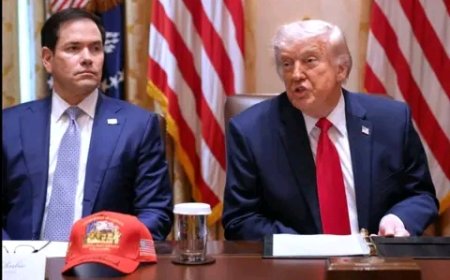
He expressed appreciation to the Trump administration for engaging with the region’s issues, contrasting their involvement with the inaction of other global actors. “At least they paid attention,” he said, noting the global focus is usually elsewhere, like in Ukraine or the Middle East.
Responding to accusations that U.S. involvement is self-serving, Kagame criticized those who had previously failed to act meaningfully. “You were here all these years, doing nothing or making things worse,” he said, pointing to ineffective sanctions and biased UN missions.
He accused the UN’s Group of Experts of selectively blaming Rwanda and the M23 while ignoring the FDLR’s role in spreading hate and genocide ideologies. “They never fully report on the FDLR or its ties to Congolese institutions,” he said. “How can so-called experts miss that?”
Finally, Kagame reaffirmed Rwanda’s commitment to self-reliance, declaring, “We don’t depend on anyone for our survival,” and highlighting Rwanda’s progress since the genocide as evidence of its determination to never be vulnerable again.
Tags: