 Kinyarwanda
 English
 Swahili



















































Israeli strike kills Gaza children at water point; military cites malfunction

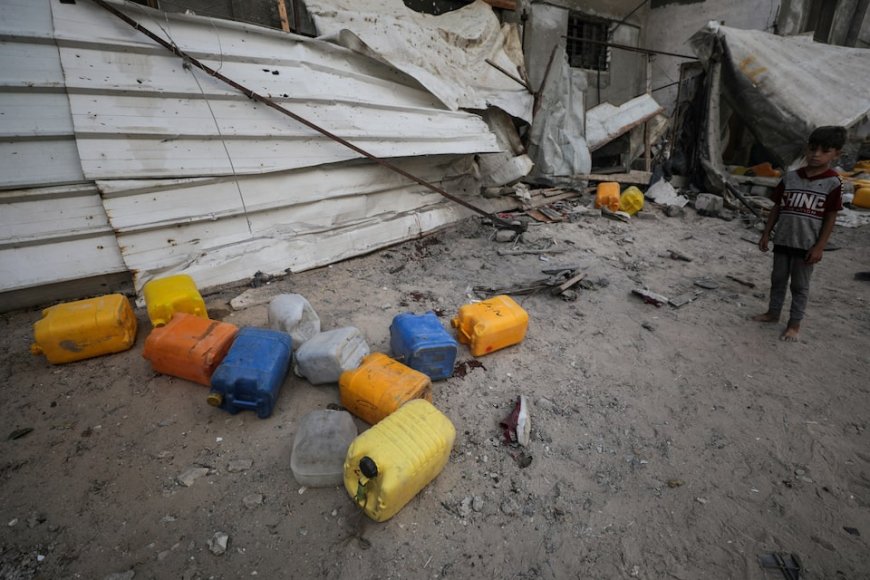
At least eight Palestinians, most of them children, were killed and more than a dozen others wounded in central Gaza on Sunday when they gathered to collect water, according to local officials. The Israeli military said the missile was targeting an Islamic Jihad militant in the area but a malfunction caused it to miss its intended target by “dozens of metres.”

“The IDF regrets any harm to uninvolved civilians,” the military said in a statement, adding that the incident was under review.
The missile struck a water distribution point in the Nuseirat refugee camp, killing six children and injuring 17 others, said Ahmed Abu Saifan, an emergency physician at Al-Awda Hospital. Water shortages in Gaza have worsened sharply in recent weeks as fuel shortages shut down desalination and sanitation plants, leaving many residents dependent on collection centres to fill plastic containers.
Hours later, a separate Israeli airstrike hit a market in Gaza City, killing 12 people, including a well-known hospital consultant, Ahmad Qandil, according to Palestinian media. The Israeli military did not immediately comment on that incident.
Gaza’s health ministry said on Sunday that more than 58,000 people have been killed since the war between Israel and Hamas erupted in October 2023, with 139 deaths recorded in the past 24 hours alone. The ministry does not distinguish between civilians and combatants but says that more than half of the dead are women and children.
Ceasefire talks stall
U.S. President Donald Trump’s Middle East envoy, Steve Witkoff, said on Sunday that he remained “hopeful” about ongoing ceasefire negotiations in Qatar. Speaking to reporters in Teterboro, New Jersey, he said he planned to meet senior Qatari officials on the sidelines of the FIFA Club World Cup final.
However, efforts to reach a truce have stalled, with both sides still divided over the scale of an Israeli withdrawal from Gaza, according to Palestinian and Israeli sources.
Israeli Prime Minister Benjamin Netanyahu was expected to convene his ministers late Sunday to discuss the latest developments. Indirect talks over a U.S.-proposed 60-day ceasefire are underway in Doha, but optimism for a breakthrough has faded, with both sides blaming each other for the deadlock.
In a video posted on Telegram on Sunday, Netanyahu insisted Israel would not compromise on its core demands: the release of all hostages still held in Gaza, the destruction of Hamas, and guarantees that Gaza will never again pose a threat to Israel.
The conflict began on October 7, 2023, when Hamas-led militants stormed into Israel, killing about 1,200 people and seizing 251 hostages. At least 20 of the remaining 50 hostages are believed to still be alive. Families of the captives gathered outside Netanyahu’s office in Jerusalem on Sunday, urging the government to reach a deal.
“The overwhelming majority of the people of Israel have spoken loudly and clearly. We want to do a deal, even at the cost of ending this war, and we want to do it now,” said Jon Polin, whose son, Hersh Goldberg-Polin, was held hostage in a Gaza tunnel and killed by his captors in August 2024.
Netanyahu and his cabinet were also set to discuss a controversial plan to relocate hundreds of thousands of Gazans to the southern city of Rafah, which Israeli Defence Minister Israel Katz has described as a new “humanitarian city.” The plan is likely to draw international criticism over forced displacement. An Israeli source said the plan would be implemented during any ceasefire, if agreed.
On Saturday, a Palestinian source familiar with the truce talks said Hamas rejected Israeli withdrawal maps because they would leave about 40% of Gaza, including all of Rafah, under Israeli control.
Israel’s military offensive has displaced almost the entire population of more than two million people in Gaza, but residents say nowhere in the coastal enclave is safe.
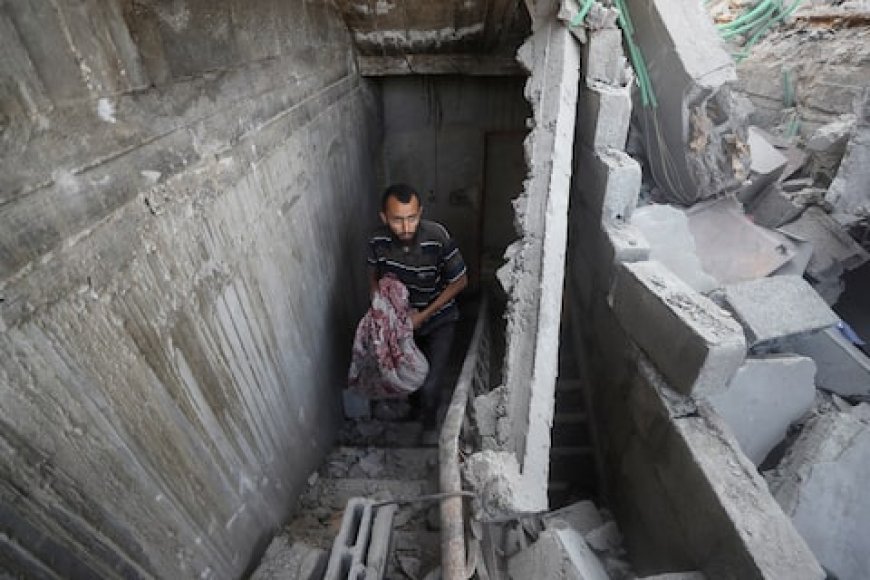
Early Sunday, a missile hit a house in Gaza City where a family had moved after an earlier evacuation order forced them from their home in the southern outskirts.
“My aunt, her husband and the children are gone. What is the fault of the children who died in an ugly, bloody massacre at dawn?” said Anas Matar, standing in the rubble