
issa
Iran-Israel latest: Before strikes, the IDF warns regions of Tehran to evacuate

Iran-Israel latest: Before strikes, the IDF warns regions of Tehran to evacuate

Jun 16, 2025 - 18:28
 0

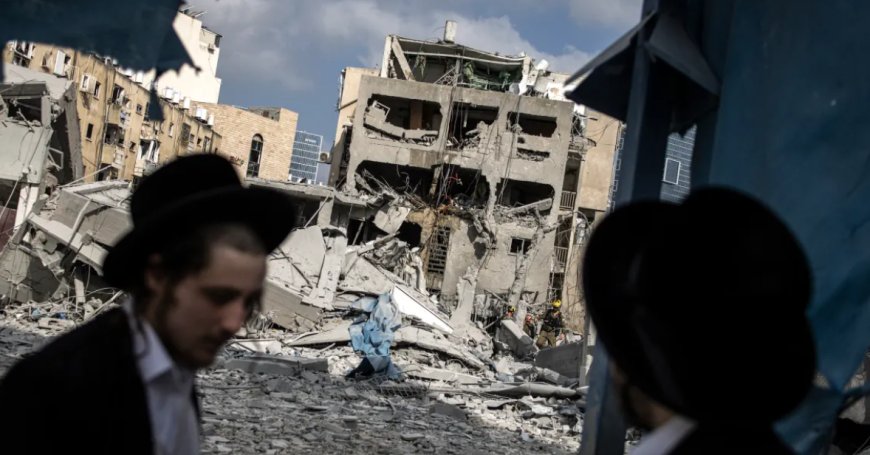
As it gets ready to launch a new round of attacks on the fourth day of the deadly confrontation, Israel has issued extraordinary evacuation orders for portions of Tehran.


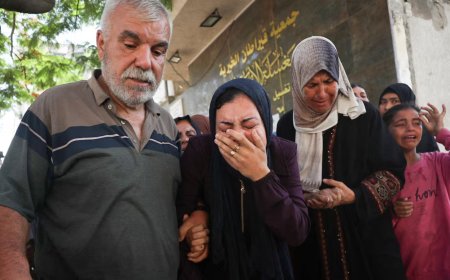
Sparked by Israel’s strikes on Iran on Friday morning, the exchange of fire has seen more than 200 people have been killed in Iran and more than 20 in Israel, their respective authorities have reported.

The Israeli military said it would strike District Three of Tehran to “attack the Iranian regime's military infrastructure”. Remaining in the area “puts your life at risk”, it told Iranian residents.
It was followed by a call from Iran’s Revolutionary Guards for residents of Tel Aviv to evacuate the city.

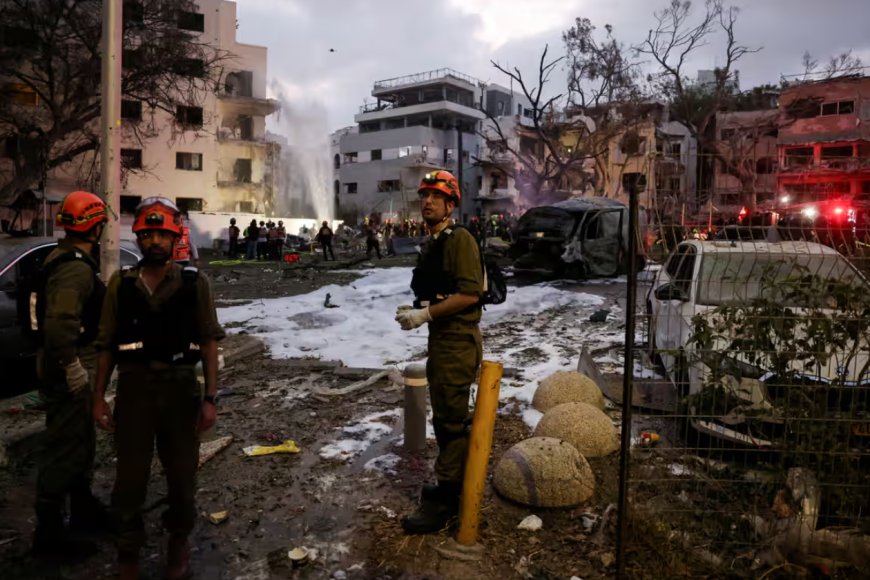
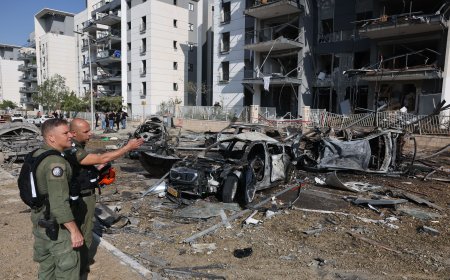
Israel said on Monday it had “full aerial operational control” over Tehran, but it failed to bat away attacks on Tel Aviv and Haifa overnight on Sunday, with the US embassy among the buildings damaged.

Meanwhile, Iranian lawmakers are preparing a bill to leave the nuclear Non-Proliferation Treaty (NPT) which prevents Iran from developing nuclear weapons, the foreign ministry has said. Tehran remains opposed to developing nuclear weapons, a spokesperson added.

Israel, along with India, Pakistan and South Sudan, are the only countries who are not signed up to the treaty.

Comment | What’s happening between Iran and Israel is a direct result of Trump’s carelessness

Donald Trump claims to be the leader who will end wars. But by effectively killing the Joint Comprehensive Plan of Action (JCPOA) nuclear containment deal with Iran in his first term in office and allowing Israeli premier Benjamin Netanyahu to run roughshod across the Middle East in his second, the Republican president is instead fanning the flames of conflict across the region.

It is Trump’s choices that have led Israel and Iran, the Middle East’s most powerful military actors, to the brink of all-out war, with a risk of escalation and spread, global economic disruption and mass casualties.

The JCPOA, signed by the US, Iran, UK, France, Germany, Russia, China and the EU in 2015, was far from perfect. It failed to clamp down on Tehran’s conventional weapons programme build-up and its intentions to arm militia as far west as the Mediterranean – but it did succeed in freezing Iran’s nuclear programme.

Iran calls on Tel Aviv residents to evacuate ahead of strikes

Iran’s Revolutionary Guards have called on residents in Tel Aviv to evacuate as soon as possible, Iranian state media reported on Monday.

It came shortly after Israel issued an evacuation warning for a specific area of Tehran.

Trump declines to sign G7 statement on Israel-Iran

Reports are beginning to emerge that the G7 countries, who are currently convening in the Canadian Rockies, have pulled together a draft statement on Israel and Iran.

But Donald Trump appears not to have signed off on the statement, sources told Reuters news agency.

The statement affirms Israel’s right to defend itself and states that Iran can never have a nuclear weapon, according to Reutes news agency,

It calls on the the countries to deescalate the conflict and avoid compromising regional stability.

Iran exercising right to self-defence, says Moscow

Russia believes Iran is exercising its right to defend itself against attack by Israel, deputy foreign minister Sergei Ryabkov was quoted as saying on Monday.

There are dangerous and obvious consequences of Israel’s strikes on Iranian nuclear facilities, Mr Ryabkov added.

He was also quoted as saying that Russia was discussing the crisis with the United States as well as maintaining contacts with both Israel and Iran.

Iran seeking talks with US and Israel to end conflict - WSJ

Iran has been sending messages to Israel and the United States that it seeks an end to the conflict, the Wall Street Journal cited officials as saying.

Tehran is also seeking a resumption of talks over its nuclear programme, the report claimed, adding that the messages had been sent through Arab intermediaries.

Israel issues evacuation notice for part of Tehran

An Israeli military spokesperson issued an evacuation warning for a designated area in Tehran, according to a post by the spokesperson on X.

It was followed by a call from Iran’s Revolutionary Guards for residents of Tel Aviv to evacuate the city.

“Immediate warning to all individuals present in the area indicated on the attached map in District 3 of Tehran,” the IDF’s Farsi account said on X, alongside a map of the evacuation zone,” the IDF spokesperson said.

“Dear citizens, for your safety, we ask that you immediately leave the aforementioned area in District 3 of Tehran.

“In the coming hours, the Israeli army will take action in this area to attack the Iranian regime's military infrastructure, just as it has done in recent days around Tehran. Your presence in this area puts your life at risk.”

The Israeli military appears to have resumed heavy strikes in Iran, posts on social media show.

What is the nuclear Non-Proliferation Treaty (NPT)?

Negotiated in the mid-to-late 1960s and first ratified in 1968, the Treaty on the Non-Proliferation of Nuclear Weapons was designed to prevent the spread of nuclear weapons.

It was negotiated by the Eighteen Nation Committee on Disarmament, a UN-sponsored organisation, and first came into force in 1970. At the time, it signalled in new era of warmer relations during the Cold War, following the escalation of an aggressive arms race between the US and USSR.

The treaty is based on three pillars:

  • nuclear non-proliferation; pledging not to engage in or assist in the development of any nuclear weapons
  • disarmament; undertaking to bring an end to the nuclear arms race with a final goal of general and complete disarmament
  • peaceful uses of nuclear energy; reaffirming the right for all parties to develop nuclear energy for peaceful purposes

Israel is one of four countries to have never signed the treaty, alongside India, Pakistan and South Sudan.

Senator seeks to limit Trump's war powers in Iran

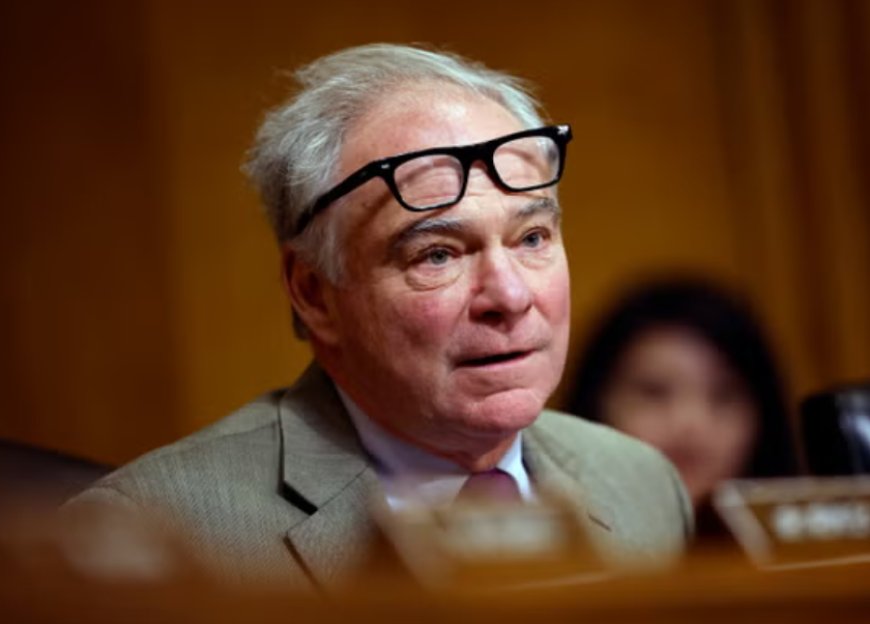
A Democratic senator has introduced legislation to prevent Donald Trump from using military force against Iran without Congress's authorization on Monday.

Tim Kaine of Virginia has tried for years to wrest back Congress's authority to declare war from the White House.

During Trump's first term, in 2020, Mr Kaine introduced a similar resolution to rein in Trump's ability to wage war against Iran. That measure passed both the Senate and House of Representatives, winning some Republican support, but did not garner enough votes to survive the Republican president's veto.

Mr Kaine said his latest war powers resolution underscores that the US Constitution gives Congress, not the president, the sole power to declare war and requires that any hostility with Iran be explicitly authorized by a declaration of war or specific authorization for the use of military force.

"It is not in our national security interest to get into a war with Iran unless that war is absolutely necessary to defend the United States. I am deeply concerned that the recent escalation of hostilities between Israel and Iran could quickly pull the United States into another endless conflict," Mr Kaine said in a statement.

MBARUSHIMANA Elia MBARUSHIMANA Elia joined journalism as a volunteer in 2018. Currently an Entertainment Journalist & News Reporter. I worked for NEWSWITHIN, MAXIMED TV, and Ukwelitimes.com as well as imirasiretv.com & bigezwehotv.com | Contact Me: +250781087999 or mbarushimanaelia50@gmail.com

Iran-Israel latest: Before strikes, the IDF warns regions of Tehran to evacuate

Jun 16, 2025 - 18:28
 0
Iran-Israel latest: Before strikes, the IDF warns regions of Tehran to evacuate

As it gets ready to launch a new round of attacks on the fourth day of the deadly confrontation, Israel has issued extraordinary evacuation orders for portions of Tehran.


Sparked by Israel’s strikes on Iran on Friday morning, the exchange of fire has seen more than 200 people have been killed in Iran and more than 20 in Israel, their respective authorities have reported.

The Israeli military said it would strike District Three of Tehran to “attack the Iranian regime's military infrastructure”. Remaining in the area “puts your life at risk”, it told Iranian residents.

It was followed by a call from Iran’s Revolutionary Guards for residents of Tel Aviv to evacuate the city.

Israel said on Monday it had “full aerial operational control” over Tehran, but it failed to bat away attacks on Tel Aviv and Haifa overnight on Sunday, with the US embassy among the buildings damaged.

Meanwhile, Iranian lawmakers are preparing a bill to leave the nuclear Non-Proliferation Treaty (NPT) which prevents Iran from developing nuclear weapons, the foreign ministry has said. Tehran remains opposed to developing nuclear weapons, a spokesperson added.

Israel, along with India, Pakistan and South Sudan, are the only countries who are not signed up to the treaty.

Comment | What’s happening between Iran and Israel is a direct result of Trump’s carelessness

Donald Trump claims to be the leader who will end wars. But by effectively killing the Joint Comprehensive Plan of Action (JCPOA) nuclear containment deal with Iran in his first term in office and allowing Israeli premier Benjamin Netanyahu to run roughshod across the Middle East in his second, the Republican president is instead fanning the flames of conflict across the region.

It is Trump’s choices that have led Israel and Iran, the Middle East’s most powerful military actors, to the brink of all-out war, with a risk of escalation and spread, global economic disruption and mass casualties.

The JCPOA, signed by the US, Iran, UK, France, Germany, Russia, China and the EU in 2015, was far from perfect. It failed to clamp down on Tehran’s conventional weapons programme build-up and its intentions to arm militia as far west as the Mediterranean – but it did succeed in freezing Iran’s nuclear programme.

Iran calls on Tel Aviv residents to evacuate ahead of strikes

Iran’s Revolutionary Guards have called on residents in Tel Aviv to evacuate as soon as possible, Iranian state media reported on Monday.

It came shortly after Israel issued an evacuation warning for a specific area of Tehran.

Trump declines to sign G7 statement on Israel-Iran

Reports are beginning to emerge that the G7 countries, who are currently convening in the Canadian Rockies, have pulled together a draft statement on Israel and Iran.

But Donald Trump appears not to have signed off on the statement, sources told Reuters news agency.

The statement affirms Israel’s right to defend itself and states that Iran can never have a nuclear weapon, according to Reutes news agency,

It calls on the the countries to deescalate the conflict and avoid compromising regional stability.

Iran exercising right to self-defence, says Moscow

Russia believes Iran is exercising its right to defend itself against attack by Israel, deputy foreign minister Sergei Ryabkov was quoted as saying on Monday.

There are dangerous and obvious consequences of Israel’s strikes on Iranian nuclear facilities, Mr Ryabkov added.

He was also quoted as saying that Russia was discussing the crisis with the United States as well as maintaining contacts with both Israel and Iran.

Iran seeking talks with US and Israel to end conflict - WSJ

Iran has been sending messages to Israel and the United States that it seeks an end to the conflict, the Wall Street Journal cited officials as saying.

Tehran is also seeking a resumption of talks over its nuclear programme, the report claimed, adding that the messages had been sent through Arab intermediaries.

Israel issues evacuation notice for part of Tehran

An Israeli military spokesperson issued an evacuation warning for a designated area in Tehran, according to a post by the spokesperson on X.

It was followed by a call from Iran’s Revolutionary Guards for residents of Tel Aviv to evacuate the city.

“Immediate warning to all individuals present in the area indicated on the attached map in District 3 of Tehran,” the IDF’s Farsi account said on X, alongside a map of the evacuation zone,” the IDF spokesperson said.

“Dear citizens, for your safety, we ask that you immediately leave the aforementioned area in District 3 of Tehran.

“In the coming hours, the Israeli army will take action in this area to attack the Iranian regime's military infrastructure, just as it has done in recent days around Tehran. Your presence in this area puts your life at risk.”

The Israeli military appears to have resumed heavy strikes in Iran, posts on social media show.

What is the nuclear Non-Proliferation Treaty (NPT)?

Negotiated in the mid-to-late 1960s and first ratified in 1968, the Treaty on the Non-Proliferation of Nuclear Weapons was designed to prevent the spread of nuclear weapons.

It was negotiated by the Eighteen Nation Committee on Disarmament, a UN-sponsored organisation, and first came into force in 1970. At the time, it signalled in new era of warmer relations during the Cold War, following the escalation of an aggressive arms race between the US and USSR.

The treaty is based on three pillars:

  • nuclear non-proliferation; pledging not to engage in or assist in the development of any nuclear weapons
  • disarmament; undertaking to bring an end to the nuclear arms race with a final goal of general and complete disarmament
  • peaceful uses of nuclear energy; reaffirming the right for all parties to develop nuclear energy for peaceful purposes

Israel is one of four countries to have never signed the treaty, alongside India, Pakistan and South Sudan.

Senator seeks to limit Trump's war powers in Iran

A Democratic senator has introduced legislation to prevent Donald Trump from using military force against Iran without Congress's authorization on Monday.

Tim Kaine of Virginia has tried for years to wrest back Congress's authority to declare war from the White House.

During Trump's first term, in 2020, Mr Kaine introduced a similar resolution to rein in Trump's ability to wage war against Iran. That measure passed both the Senate and House of Representatives, winning some Republican support, but did not garner enough votes to survive the Republican president's veto.

Mr Kaine said his latest war powers resolution underscores that the US Constitution gives Congress, not the president, the sole power to declare war and requires that any hostility with Iran be explicitly authorized by a declaration of war or specific authorization for the use of military force.

"It is not in our national security interest to get into a war with Iran unless that war is absolutely necessary to defend the United States. I am deeply concerned that the recent escalation of hostilities between Israel and Iran could quickly pull the United States into another endless conflict," Mr Kaine said in a statement.