issa
China’s first humanoid robot incubator expands to southeast asia with singapore office

China’s first humanoid robot incubator expands to southeast asia with singapore office

May 22, 2026 - 06:47
 0

China’s rapidly growing robotics industry is taking another major step onto the international stage after the Shanghai Humanoid Robot Innovation Incubator announced plans to establish its first overseas office in Singapore later this year. The move signals China’s ambition to strengthen its influence in the global artificial intelligence and robotics sector while also deepening technology partnerships across Southeast Asia.


The Shanghai-based incubator is considered the first organisation in China dedicated entirely to supporting the development of humanoid robots — machines designed to look and move like human beings. Since its creation, the incubator has helped a number of Chinese startups develop advanced robots capable of performing tasks ranging from industrial work and customer service to healthcare assistance and home support.

According to officials from the incubator, Singapore was selected because of its strong digital economy, advanced technological infrastructure, and strategic location in Southeast Asia. The country has increasingly become a major innovation hub attracting global technology companies, investors, and AI researchers.

The Singapore office is expected to begin operations in the second half of 2026 and will focus on helping Chinese robotics firms enter Southeast Asian markets. It will also support research partnerships, investment opportunities, and testing of humanoid robots in real-world business environments.

Executives involved in the project said Southeast Asia presents huge opportunities for robotics companies as governments and private businesses across the region continue investing heavily in automation and smart technologies. Countries in the region are seeking solutions that can help address labor shortages, improve efficiency, and modernize industries such as healthcare, manufacturing, transportation, hospitality, and logistics.

Singapore has been especially aggressive in promoting artificial intelligence and robotics as part of its national digital transformation strategy. The government has supported numerous smart city projects, AI research centers, and automation initiatives aimed at increasing productivity and strengthening economic competitiveness.

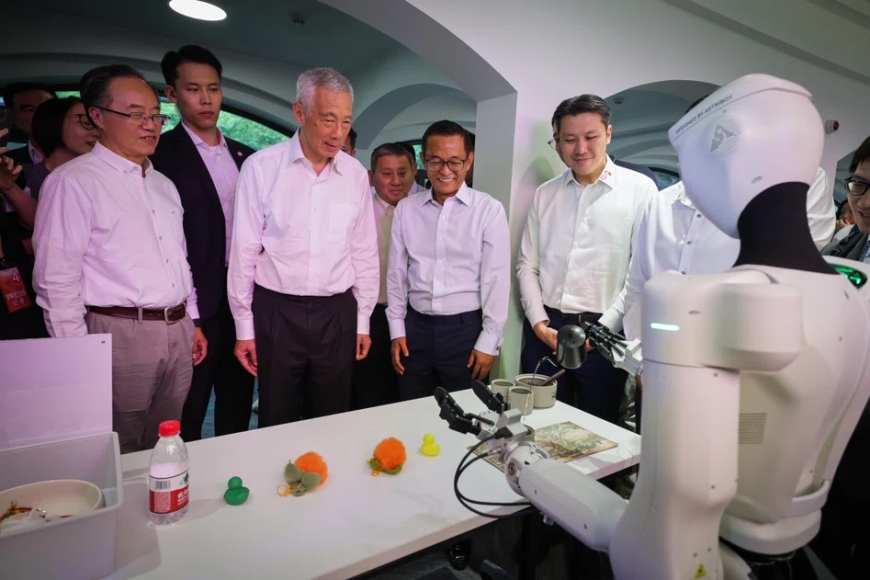
The announcement gained international attention after Singapore Senior Minister Lee Hsien Loong recently visited the incubator during an official trip to Shanghai. During the visit, he observed several humanoid robots demonstrating advanced capabilities including serving tea, greeting visitors, conducting basic health assessments, and responding to spoken instructions.

Some of the robots showcased were powered by advanced AI systems capable of understanding voice commands, recognizing human movement, and adapting to different environments. Industry experts say such technologies are rapidly evolving and may soon become part of daily life in many sectors.

Chinese robotics companies have accelerated development significantly in recent years due to strong government backing and increasing investor confidence in AI technologies. Beijing has identified robotics and artificial intelligence as strategic industries that could drive future economic growth and global competitiveness.

Several Chinese firms are already competing to become world leaders in humanoid robotics. Companies such as Unitree Robotics, UBtech, AgiBot, and Engine AI are developing robots capable of walking, running, carrying objects, and interacting naturally with humans. Some models are already being tested in factories, warehouses, research laboratories, and public service environments.

Analysts believe China’s robotics industry could become one of the largest in the world over the next decade, especially as aging populations and labor shortages push businesses toward automation. Humanoid robots are increasingly viewed as a long-term solution for repetitive or physically demanding jobs that are difficult to fill with human workers.

Experts also say Singapore offers Chinese companies a valuable international platform because of its business-friendly policies, strong financial sector, and connections to global markets. Through Singapore, Chinese robotics startups may gain easier access to international investors, multinational companies, and research institutions.

The expansion into Singapore also reflects growing technological competition globally, especially between major economies racing to dominate the future of artificial intelligence and robotics. While the United States, Japan, South Korea, and European nations continue investing heavily in robotics research, China has emerged as one of the fastest-growing players in the industry.

Industry observers believe the next few years could determine which countries and companies become leaders in humanoid robot technology. As AI systems continue improving, humanoid robots are expected to become more intelligent, affordable, and capable of operating independently in complex environments.

Many experts predict that in the future humanoid robots could work in hospitals caring for elderly patients, assist travelers in airports, provide customer support in hotels and shopping centers, or help workers in factories and construction sites.

The opening of the Singapore office marks an important milestone for China’s robotics ambitions and could strengthen cooperation between China and Southeast Asia in one of the world’s most competitive technology sectors.

China’s first humanoid robot incubator expands to southeast asia with singapore office

May 22, 2026 - 06:47
May 22, 2026 - 08:00
 0
China’s first humanoid robot incubator expands to southeast asia with singapore office

China’s rapidly growing robotics industry is taking another major step onto the international stage after the Shanghai Humanoid Robot Innovation Incubator announced plans to establish its first overseas office in Singapore later this year. The move signals China’s ambition to strengthen its influence in the global artificial intelligence and robotics sector while also deepening technology partnerships across Southeast Asia.


The Shanghai-based incubator is considered the first organisation in China dedicated entirely to supporting the development of humanoid robots — machines designed to look and move like human beings. Since its creation, the incubator has helped a number of Chinese startups develop advanced robots capable of performing tasks ranging from industrial work and customer service to healthcare assistance and home support.

According to officials from the incubator, Singapore was selected because of its strong digital economy, advanced technological infrastructure, and strategic location in Southeast Asia. The country has increasingly become a major innovation hub attracting global technology companies, investors, and AI researchers.

The Singapore office is expected to begin operations in the second half of 2026 and will focus on helping Chinese robotics firms enter Southeast Asian markets. It will also support research partnerships, investment opportunities, and testing of humanoid robots in real-world business environments.

Executives involved in the project said Southeast Asia presents huge opportunities for robotics companies as governments and private businesses across the region continue investing heavily in automation and smart technologies. Countries in the region are seeking solutions that can help address labor shortages, improve efficiency, and modernize industries such as healthcare, manufacturing, transportation, hospitality, and logistics.

Singapore has been especially aggressive in promoting artificial intelligence and robotics as part of its national digital transformation strategy. The government has supported numerous smart city projects, AI research centers, and automation initiatives aimed at increasing productivity and strengthening economic competitiveness.

The announcement gained international attention after Singapore Senior Minister Lee Hsien Loong recently visited the incubator during an official trip to Shanghai. During the visit, he observed several humanoid robots demonstrating advanced capabilities including serving tea, greeting visitors, conducting basic health assessments, and responding to spoken instructions.

Some of the robots showcased were powered by advanced AI systems capable of understanding voice commands, recognizing human movement, and adapting to different environments. Industry experts say such technologies are rapidly evolving and may soon become part of daily life in many sectors.

Chinese robotics companies have accelerated development significantly in recent years due to strong government backing and increasing investor confidence in AI technologies. Beijing has identified robotics and artificial intelligence as strategic industries that could drive future economic growth and global competitiveness.

Several Chinese firms are already competing to become world leaders in humanoid robotics. Companies such as Unitree Robotics, UBtech, AgiBot, and Engine AI are developing robots capable of walking, running, carrying objects, and interacting naturally with humans. Some models are already being tested in factories, warehouses, research laboratories, and public service environments.

Analysts believe China’s robotics industry could become one of the largest in the world over the next decade, especially as aging populations and labor shortages push businesses toward automation. Humanoid robots are increasingly viewed as a long-term solution for repetitive or physically demanding jobs that are difficult to fill with human workers.

Experts also say Singapore offers Chinese companies a valuable international platform because of its business-friendly policies, strong financial sector, and connections to global markets. Through Singapore, Chinese robotics startups may gain easier access to international investors, multinational companies, and research institutions.

The expansion into Singapore also reflects growing technological competition globally, especially between major economies racing to dominate the future of artificial intelligence and robotics. While the United States, Japan, South Korea, and European nations continue investing heavily in robotics research, China has emerged as one of the fastest-growing players in the industry.

Industry observers believe the next few years could determine which countries and companies become leaders in humanoid robot technology. As AI systems continue improving, humanoid robots are expected to become more intelligent, affordable, and capable of operating independently in complex environments.

Many experts predict that in the future humanoid robots could work in hospitals caring for elderly patients, assist travelers in airports, provide customer support in hotels and shopping centers, or help workers in factories and construction sites.

The opening of the Singapore office marks an important milestone for China’s robotics ambitions and could strengthen cooperation between China and Southeast Asia in one of the world’s most competitive technology sectors.