 Kinyarwanda
 English
 Swahili


























































Scientists warn airborne microplastics could be worsening global warming

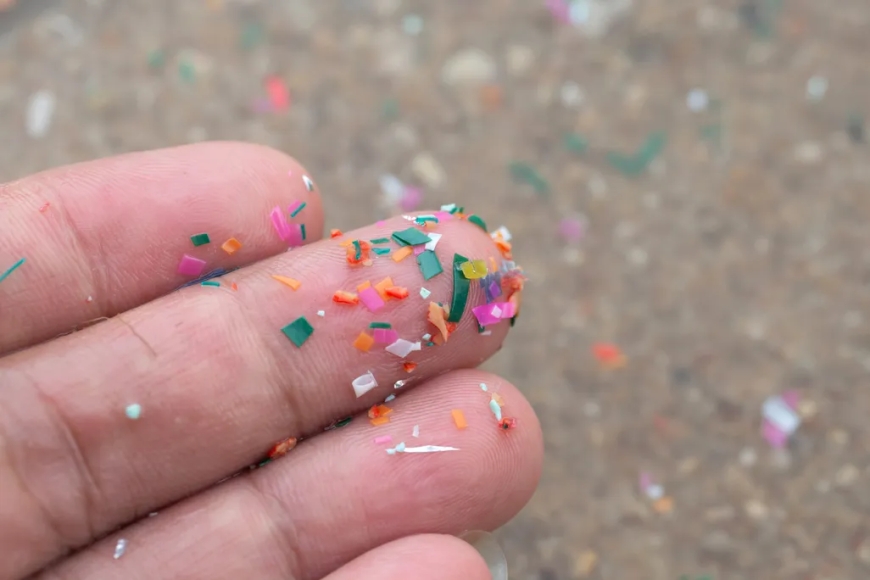
A new study published in Nature Climate Change journal has revealed that tiny plastic particles floating in the atmosphere maybe contributing to global warming. Researchers found that microplastics and nanoplastics absorb heat from sunlight.

Dark-colored particles in plastics such as black,blue,red and yellow plastics are known to be the most heat absorbers from sunlight while white plastics tend to reflect sunlight back into space, these heat-absorbing plastics trap heat in the atmosphere, creating an intimidating warming effect that scientists say outweighs any potential cooling impact.
The study involved involved scientists from China and the United States, including Drew Shindell and Yu Liu. Laboratory tests showed that some plastic particles absorb sunlight up to 75 times more strongly than lighter-colored plastics.
Researchers also discovered that plastics can darken over time when exposed to sunlight, increasing their ability to absorb heat. Although the warming effect is still much smaller than fossil fuel emissions, experts say the findings highlight another environmental danger linked to plastic pollution.
Environmental experts say the research highlights that plastic pollution is no longer solely a waste or health issue, but also a climate concern. Scientists caution that there is still uncertainty about the exact amount of plastic in the atmosphere because most measurements have only been taken near the ground. However, researchers believe the findings should prompt governments and industries to strengthen efforts to reduce plastic waste.
In countries like Rwanda, where environmental protection campaigns are already gaining traction, the study could increase pressure for tougher action against plastic pollution and encourage more sustainable alternatives.