
issa
Analysis: Why Debate Over Ruto’s ‘Singapore Dream’ Has Struck a Nerve in Kenya

Analysis: Why Debate Over Ruto’s ‘Singapore Dream’ Has Struck a Nerve in Kenya

Jan 3, 2026 - 09:38
 0

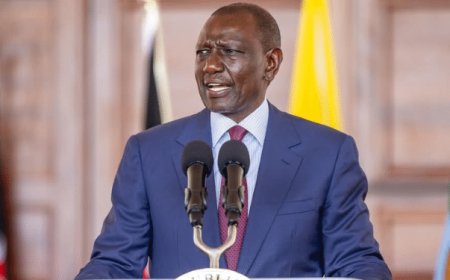
Public debate over President Ruto’s “Singapore dream” highlights deep divisions on Kenya’s development path, with critics and supporters questioning how applicable the model is to Kenya’s political and social realities.


A recent column examining President William Ruto’s ambition to model Kenya’s development on Singapore has generated a wave of public reaction, ranging from endorsement to sharp criticism. The intensity of the response highlights how deeply questions of economic direction, governance and national identity resonate in Kenya’s current political climate.

President Ruto has repeatedly invoked Singapore as an example of what disciplined leadership, long-term planning and institutional efficiency can achieve. For supporters, the comparison signals ambition and a desire to lift Kenya into the ranks of high-income economies. For critics, it raises concerns about whether such a model is compatible with Kenya’s political culture, social diversity and democratic framework.

The debate reflects a broader tension within Kenyan public discourse: how to balance aspiration with realism. Singapore’s transformation from a poor trading port into a global financial hub was shaped by specific historical conditions, including a strong central state, a relatively small population and decades of policy continuity. Kenya, by contrast, operates within a pluralistic democracy marked by competitive politics, devolved governance and persistent socio-economic inequality.

This is where analysis, rather than rhetoric, becomes essential. Development models are rarely transferable in their entirety. Economists and political scholars generally agree that successful reforms depend not only on policy design but also on institutional capacity, public trust and cultural context. Without these, even well-intentioned strategies can struggle to deliver results.

The reaction to the column also points to the increasingly polarised nature of political debate in Kenya. Discussions about policy often become entangled with personal attitudes toward political leaders, making it difficult to separate critique of ideas from support or opposition to individuals. This dynamic can limit meaningful engagement with complex issues such as economic planning, governance reform and social cohesion.

From an academic perspective, sustained public debate is not inherently negative. On the contrary, it can serve as a measure of democratic health. The challenge lies in maintaining a space where disagreement is informed by evidence and historical understanding rather than emotion or political allegiance.

As Kenya continues to grapple with high debt, unemployment and cost-of-living pressures, the question is not whether ambition is necessary, but how it should be pursued. The comparison with Singapore may be useful as a reference point, but Kenya’s path forward will ultimately depend on solutions grounded in its own institutional realities and social fabric.

The strength of the public reaction suggests that Kenyans are engaged in this conversation. Whether that engagement translates into constructive policy dialogue remains an open question.


Layla kamanzi Layla Kamanzi is a passionate journalist and creative writer with a keen eye for impactful storytelling. As a Journalism and Mass Communication student at Mount Kenya University, she is dedicated to using words as a tool to inform, inspire, and amplify the voices of everyday people. Driven by curiosity and a love for truth, Layla explores stories that shape communities and spark meaningful conversations. She enjoys blending facts with compelling narratives to create content that educates, empowers, and connects audiences across East Africa and beyond.

Analysis: Why Debate Over Ruto’s ‘Singapore Dream’ Has Struck a Nerve in Kenya

Jan 3, 2026 - 09:38
Jan 3, 2026 - 09:39
 0
Analysis: Why Debate Over Ruto’s ‘Singapore Dream’ Has Struck a Nerve in Kenya

Public debate over President Ruto’s “Singapore dream” highlights deep divisions on Kenya’s development path, with critics and supporters questioning how applicable the model is to Kenya’s political and social realities.


A recent column examining President William Ruto’s ambition to model Kenya’s development on Singapore has generated a wave of public reaction, ranging from endorsement to sharp criticism. The intensity of the response highlights how deeply questions of economic direction, governance and national identity resonate in Kenya’s current political climate.

President Ruto has repeatedly invoked Singapore as an example of what disciplined leadership, long-term planning and institutional efficiency can achieve. For supporters, the comparison signals ambition and a desire to lift Kenya into the ranks of high-income economies. For critics, it raises concerns about whether such a model is compatible with Kenya’s political culture, social diversity and democratic framework.

The debate reflects a broader tension within Kenyan public discourse: how to balance aspiration with realism. Singapore’s transformation from a poor trading port into a global financial hub was shaped by specific historical conditions, including a strong central state, a relatively small population and decades of policy continuity. Kenya, by contrast, operates within a pluralistic democracy marked by competitive politics, devolved governance and persistent socio-economic inequality.

This is where analysis, rather than rhetoric, becomes essential. Development models are rarely transferable in their entirety. Economists and political scholars generally agree that successful reforms depend not only on policy design but also on institutional capacity, public trust and cultural context. Without these, even well-intentioned strategies can struggle to deliver results.

The reaction to the column also points to the increasingly polarised nature of political debate in Kenya. Discussions about policy often become entangled with personal attitudes toward political leaders, making it difficult to separate critique of ideas from support or opposition to individuals. This dynamic can limit meaningful engagement with complex issues such as economic planning, governance reform and social cohesion.

From an academic perspective, sustained public debate is not inherently negative. On the contrary, it can serve as a measure of democratic health. The challenge lies in maintaining a space where disagreement is informed by evidence and historical understanding rather than emotion or political allegiance.

As Kenya continues to grapple with high debt, unemployment and cost-of-living pressures, the question is not whether ambition is necessary, but how it should be pursued. The comparison with Singapore may be useful as a reference point, but Kenya’s path forward will ultimately depend on solutions grounded in its own institutional realities and social fabric.

The strength of the public reaction suggests that Kenyans are engaged in this conversation. Whether that engagement translates into constructive policy dialogue remains an open question.