 Kinyarwanda
 English
 Swahili

















































Ruto Approves Key Anti-Corruption and Social Protection Reforms

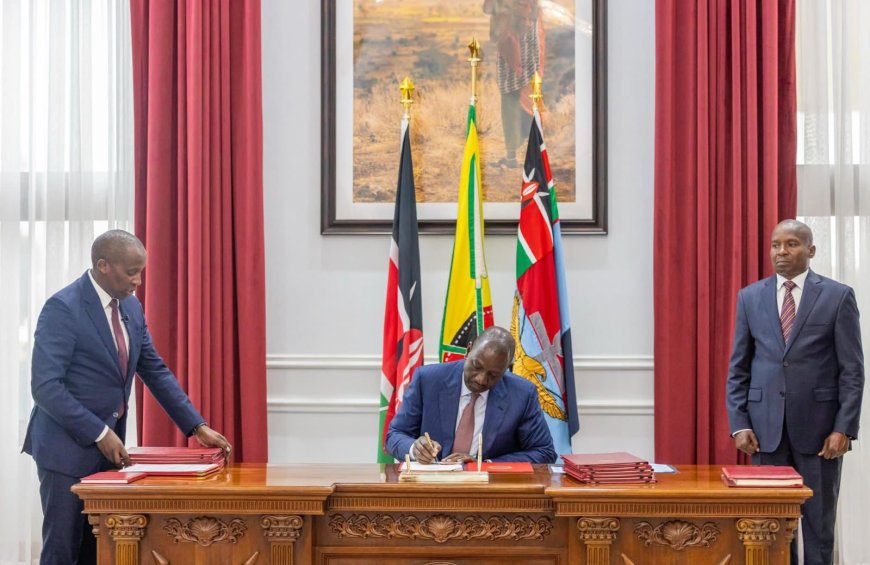
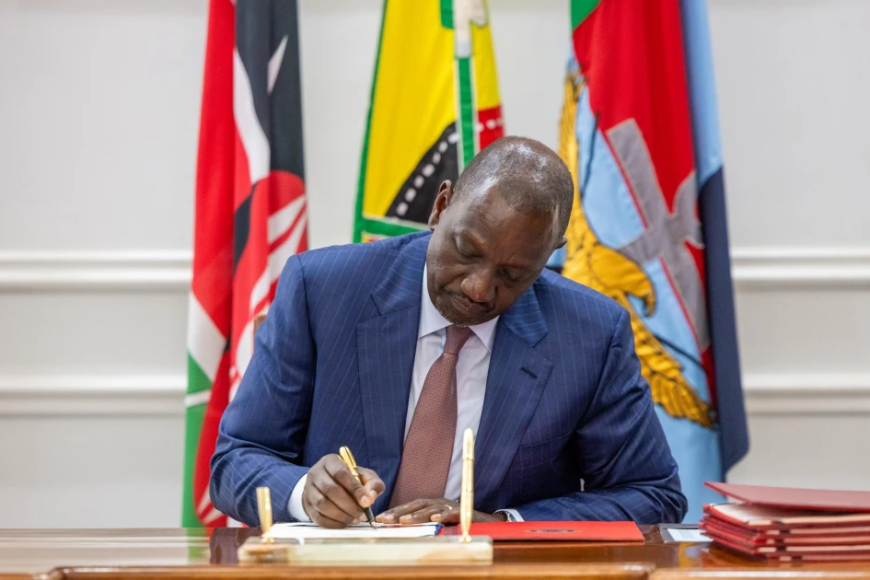
President William Ruto has signed into law two major legislative reforms aimed at tightening integrity within public service and enhancing the social welfare net across Kenya.

The first, the Conflict of Interest Act, 2023, replaces the now-repealed Public Officer Ethics Act (Cap. 185B), consolidating scattered provisions on public sector ethics into a single, enforceable legal framework. Spearheaded by National Assembly Majority Leader Kimani Ichung’wah, the law elevates the Ethics and Anti-Corruption Commission (EACC) as the lead institution in ensuring compliance and enforcement.
Under the new law, public servants are prohibited from misusing their offices for personal gain, engaging in contracts with agencies they work for, or taking part in decisions where they have private interests. External employment that could conflict with official duties is also outlawed.
Additionally, the law mandates full disclosure of income, assets, and liabilities, including those held by spouses and dependent children. Public officers must recuse themselves in matters where conflict arises.
Deputy President Kithure Kindiki welcomed the enactment, calling it "a turning point in the war against graft":
“We’ve shut down the loopholes and the proxies. This gives EACC a sharpened blade to cut through systemic corruption.”
Alongside it, the Social Protection Act, 2025, also championed by Ichung’wah, introduces a comprehensive, non-contributory safety net designed to protect Kenyans throughout their lives from infancy to old age.
The new framework establishes a National Board for Social Protection, chaired by a presidential appointee, and composed of representatives from key ministries, county governments, and civil society. The board will oversee cash assistance, psychosocial support, food aid, and assistive equipment distribution.
Counties are assigned an implementation role: crafting local laws aligned with national policy, maintaining up-to-date registries of vulnerable groups, and allocating resources to support them.
Eligible beneficiaries include:
- Orphans and vulnerable children
- Persons with disabilities
- Elderly persons facing poverty
- Disaster-affected individuals
- Caregivers without income or support
The Cabinet Secretary for Social Protection is authorized to expand these categories as needed. Registration will involve a formal assessment, and any rejections may be appealed first to the board, and then if necessary to the High Court.
To finance these programmes, the law creates a Social Protection Fund, to be overseen by the National Treasury.