
issa
Macron’s Digital Awakening: A Call to Rescue Democracy from the Chaos of Social Media

Macron’s Digital Awakening: A Call to Rescue Democracy from the Chaos of Social Media

Oct 30, 2025 - 13:02
 0

French President Emmanuel Macron has launched a bold debate on the dangers of social media and digital disorder, warning that hyperconnectivity and algorithmic manipulation are undermining public trust and the integrity of democratic debate. He calls for an ethical, educated, and responsible digital culture to restore truth, reason, and dignity in public discourse.


In an age flooded with images, notifications, and “instant truths,” French President Emmanuel Macron has chosen to open an essential debate: the democratic crisis fueled by the excesses of social media and the growing digital anarchy.

By addressing what he calls the “deconstruction of public debate,” the French leader joins a rare circle of clear-eyed statesmen who grasp the magnitude of this unprecedented technological shift.

Once hailed as a realm of liberation, the internet has increasingly transformed into a theatre of collective hysteria a forum without moderation where noise overwhelms reason. Under the dominance of algorithms, public discourse has fragmented; nuance has vanished; and truth once the fruit of enlightened debate now drifts, battered by waves of emotion and manipulation.

Far from expanding democracy’s horizons, hyperconnectivity has inverted its foundations. It has replaced reasoning with rumor, reflection with outrage, and trust with suspicion.

The late Italian semiotician Umberto Eco foresaw this decline with biting irony: “Social media has given the right to speak to legions of imbeciles.” Those “legions,” Eco noted, do not represent the people, but rather the crowds misled by the illusion of knowledge convinced that every opinion, however unfounded, carries the weight of expertise.

The danger lies not in free speech itself, but in the blind equalization of competence and conscience a leveling down where ignorance challenges established science and noise claims authority over wisdom.

The Temptation of Informational Chaos

Modern democracies France foremost among them now face an unprecedented erosion of public trust. Everyone is suspected of deceit: the journalist of being manipulated, the scientist of being bought, the judge of being corrupt, and the president of being dishonest. What was once healthy skepticism has turned into collective paranoia.

Social networks have shattered traditional frameworks of mediation, allowing everyone to build a personalized reality, unchecked by reason or evidence.

It is this self-fragmentation of reality that Macron seeks to confront: How can democratic debate survive when each citizen lives within a cognitive bubble, constantly fed with content that reinforces their biases? How can a republic thrive when digital platforms reward anger, fear, and outrage at the expense of thoughtful dialogue?

Here, “freedom of expression” has too often become the mask for a tyranny of stupidity where the deafening noise of opinions silences the voice of knowledge.

Democracy cannot endure as a contest of insults. It requires an ecology of public discourse, a discipline of exchange, and a hierarchy of truth. Yet, in the attention-driven economy that defines our digital age, emotional reactions, provocation, and scandal are the new currencies. The logic of the market now stands in direct opposition to the logic of political reason.

Toward Digital Responsibility among Nations

By opening this debate, Emmanuel Macron is not seeking to restrict freedom, but to restore dignity to democratic dialogue. He refuses to let the Republic drown beneath the daily torrents of slander and misinformation. His initiative is rooted in a long-term vision not censorship, but education, accountability, and the rebuilding of a civic digital space worthy of democratic values.

Modern societies must learn to regulate without gagging, to inform without deceiving, and to connect without dulling minds. This demands rare political courage: the will to challenge tech giants, to confront the moral questions behind algorithms, and to redefine the foundations of a healthy public sphere.

In diagnosing this crisis, Macron is not nostalgic for the past he is calling for an ethical awakening. Technology may have abolished distance, but it has also deepened the chasm within human consciousness.

To survive the age of social networks, democracy must once again become an art of discernment. That is precisely Macron’s message: in a world where digital crowds blur the line between opinion and truth, we must, more than ever, learn to think before speaking and to listen before judging.

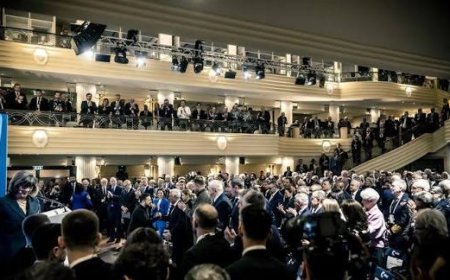
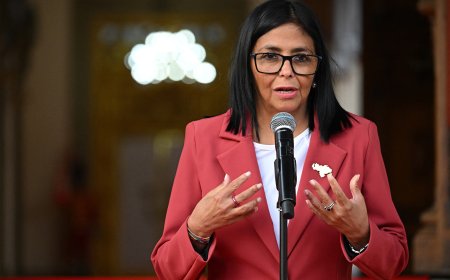
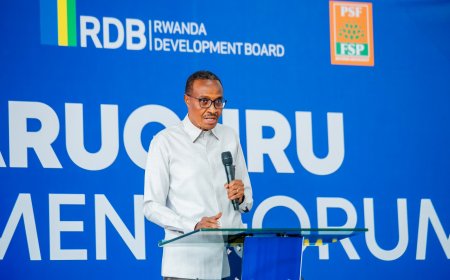
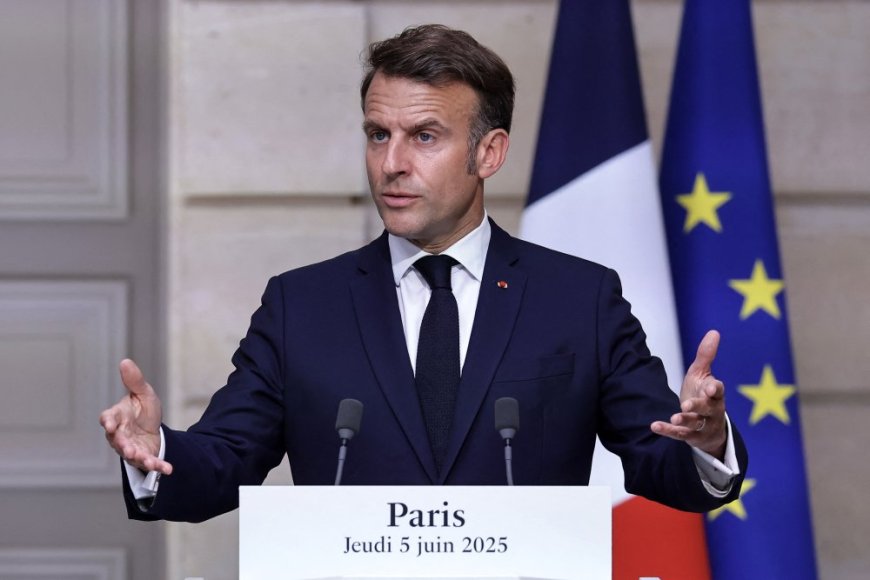
French President Emmanuel Macron delivers a speech addressing the impact of social media on democracy, urging for ethical responsibility and digital reform in the public sphere.


Layla kamanzi Layla Kamanzi is a passionate journalist and creative writer with a keen eye for impactful storytelling. As a Journalism and Mass Communication student at Mount Kenya University, she is dedicated to using words as a tool to inform, inspire, and amplify the voices of everyday people. Driven by curiosity and a love for truth, Layla explores stories that shape communities and spark meaningful conversations. She enjoys blending facts with compelling narratives to create content that educates, empowers, and connects audiences across East Africa and beyond.

Macron’s Digital Awakening: A Call to Rescue Democracy from the Chaos of Social Media

Oct 30, 2025 - 13:02
Oct 30, 2025 - 13:05
 0
Macron’s Digital Awakening: A Call to Rescue Democracy from the Chaos of Social Media

French President Emmanuel Macron has launched a bold debate on the dangers of social media and digital disorder, warning that hyperconnectivity and algorithmic manipulation are undermining public trust and the integrity of democratic debate. He calls for an ethical, educated, and responsible digital culture to restore truth, reason, and dignity in public discourse.


In an age flooded with images, notifications, and “instant truths,” French President Emmanuel Macron has chosen to open an essential debate: the democratic crisis fueled by the excesses of social media and the growing digital anarchy.

By addressing what he calls the “deconstruction of public debate,” the French leader joins a rare circle of clear-eyed statesmen who grasp the magnitude of this unprecedented technological shift.

Once hailed as a realm of liberation, the internet has increasingly transformed into a theatre of collective hysteria a forum without moderation where noise overwhelms reason. Under the dominance of algorithms, public discourse has fragmented; nuance has vanished; and truth once the fruit of enlightened debate now drifts, battered by waves of emotion and manipulation.

Far from expanding democracy’s horizons, hyperconnectivity has inverted its foundations. It has replaced reasoning with rumor, reflection with outrage, and trust with suspicion.

The late Italian semiotician Umberto Eco foresaw this decline with biting irony: “Social media has given the right to speak to legions of imbeciles.” Those “legions,” Eco noted, do not represent the people, but rather the crowds misled by the illusion of knowledge convinced that every opinion, however unfounded, carries the weight of expertise.

The danger lies not in free speech itself, but in the blind equalization of competence and conscience a leveling down where ignorance challenges established science and noise claims authority over wisdom.

The Temptation of Informational Chaos

Modern democracies France foremost among them now face an unprecedented erosion of public trust. Everyone is suspected of deceit: the journalist of being manipulated, the scientist of being bought, the judge of being corrupt, and the president of being dishonest. What was once healthy skepticism has turned into collective paranoia.

Social networks have shattered traditional frameworks of mediation, allowing everyone to build a personalized reality, unchecked by reason or evidence.

It is this self-fragmentation of reality that Macron seeks to confront: How can democratic debate survive when each citizen lives within a cognitive bubble, constantly fed with content that reinforces their biases? How can a republic thrive when digital platforms reward anger, fear, and outrage at the expense of thoughtful dialogue?

Here, “freedom of expression” has too often become the mask for a tyranny of stupidity where the deafening noise of opinions silences the voice of knowledge.

Democracy cannot endure as a contest of insults. It requires an ecology of public discourse, a discipline of exchange, and a hierarchy of truth. Yet, in the attention-driven economy that defines our digital age, emotional reactions, provocation, and scandal are the new currencies. The logic of the market now stands in direct opposition to the logic of political reason.

Toward Digital Responsibility among Nations

By opening this debate, Emmanuel Macron is not seeking to restrict freedom, but to restore dignity to democratic dialogue. He refuses to let the Republic drown beneath the daily torrents of slander and misinformation. His initiative is rooted in a long-term vision not censorship, but education, accountability, and the rebuilding of a civic digital space worthy of democratic values.

Modern societies must learn to regulate without gagging, to inform without deceiving, and to connect without dulling minds. This demands rare political courage: the will to challenge tech giants, to confront the moral questions behind algorithms, and to redefine the foundations of a healthy public sphere.

In diagnosing this crisis, Macron is not nostalgic for the past he is calling for an ethical awakening. Technology may have abolished distance, but it has also deepened the chasm within human consciousness.

To survive the age of social networks, democracy must once again become an art of discernment. That is precisely Macron’s message: in a world where digital crowds blur the line between opinion and truth, we must, more than ever, learn to think before speaking and to listen before judging.
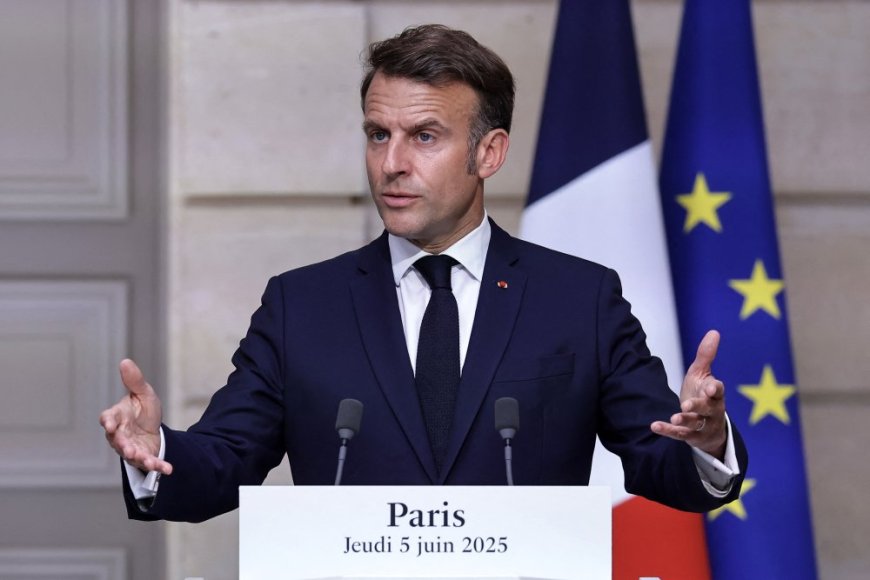
French President Emmanuel Macron delivers a speech addressing the impact of social media on democracy, urging for ethical responsibility and digital reform in the public sphere.