 Kinyarwanda
 English
 Swahili





































Trial of nonstop passenger buses is started in Kigali
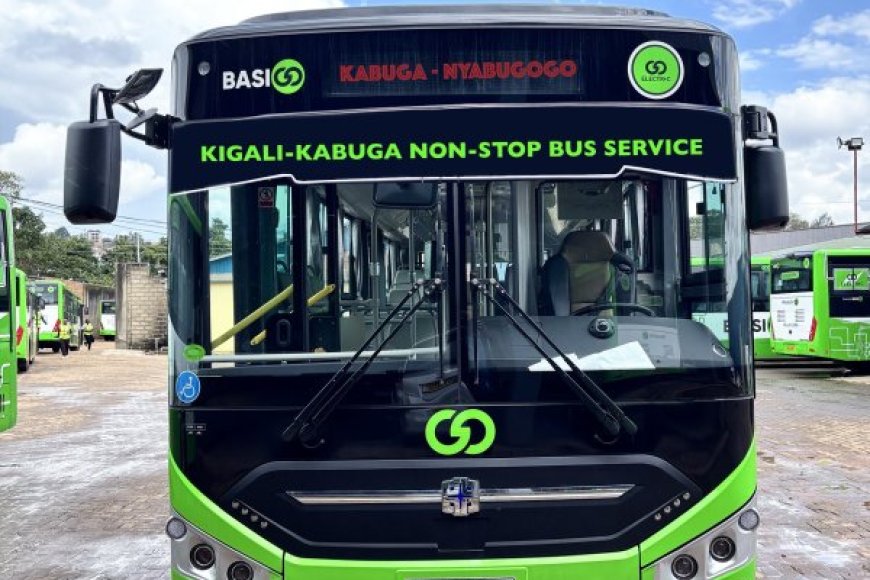
In an effort to shorten wait times at bus stops and stations, the City of Kigali has implemented a one-month experiment of non-stop passenger buses on the Kabuga-Nyabugogo route.

Launched on Saturday, May 24, the trial initiative is to evaluate passenger flow patterns and enhance commuters' experience, especially during peak hours.
Commuters can anticipate a bus every three to five minutes at both terminal stations and wayside stops, with buses running everyday from 5:00 a.m. to 10:00 p.m.
The new project, which only uses electric buses, aims to alleviate passenger congestion as the city explores a more dependable, eco-friendly public transportation system, officials said.
A maximum of 63 passengers will join the buses at Kabuga and Nyabugogo stations before they depart; the remaining seats will be assigned to people who are waiting at roadside stops. With each bus making about eight trips a day instead of the typical five, the buses help preserve the drivers' work shifts.
According to City of Kigali spokesperson Emma Claudine Ntireganya, the trial would assist in figuring out the best way to strike a balance between accessibility and efficiency while making sure that no passenger is left behind.
"The purpose of this pilot study is to determine whether drivers can compensate for low passenger volumes during off-peak hours," Ntirenganya stated.
"We also want to make room for those onboarding along the way. Typically, buses get overcrowded at stations and people waiting at intermediate stops are left stranded. This new system is helping us rethink how we serve all commuters more equitably.”
The operating companies will continue to compensate the drivers as usual, even if they carry just five or ten passengers. Because the costs related to charging batteries and maintenance are fully covered, meaning drivers are not incurring any losses, said Ntirenganya.
Ntirenganya also said that the government wants people to use public transport more rely on it.
“What really pushes us to use motorcycles is the long queues at bus stops and the overcrowding in buses, especially during peak hours," said Eric Habimana, who commutes regularly from Kabuga to Nyabugogo.
"Sometimes, even when a bus arrives, it’s already full from previous stops and we’re forced to wait even longer or find alternative transport means just to get to work on time.”
Ten buses are operating on the Kabuga-Nyabugogo route as part of the trial.
The move is part of Kigali’s broader efforts to promote environmentally friendly transport options and reduce road congestion and pollution.
“I have noticed a real improvement in waiting time. The buses come more frequently now, and I no longer feel pressured to rush or fight for space," said Clarisse Umutoni, a commuter who boards from Masaka. "If this continues, I might completely stop using motorcycles because they are more expensive.”
Jean Baptiste Kalisa, a driver on the Kabuga–Nyabugogo route, stated, "This new system is helping us improve the flow, but to be more effective, there needs to be stricter enforcement against illegal operators who disrupt our routes and confuse passengers."
Since the technology will be implemented on all lines after the pilot project is successful, authorities are encouraging locals to utilize the upgraded public transportation system.
Tags: