issa
Burundi Exports Minerals Worth 26 Billion FBu with No Revenue Recorded, Watchdog Reveals

Burundi Exports Minerals Worth 26 Billion FBu with No Revenue Recorded, Watchdog Reveals

Oct 31, 2025 - 20:35
 0

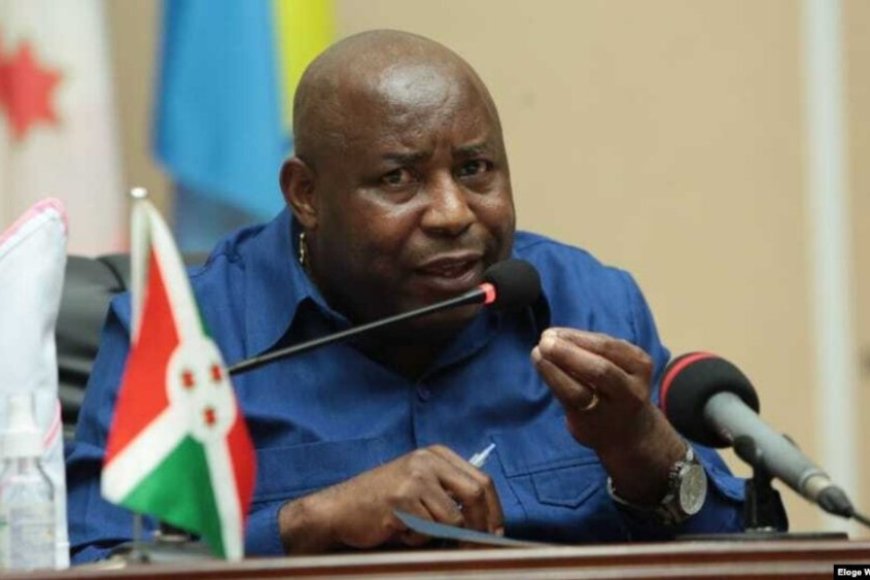
Burundi’s anti-corruption watchdog OLUCOME has revealed that the country exported minerals valued at over 26 billion Burundian francs last year without any recorded revenue entering the state treasury. Despite President Évariste Ndayishimiye’s promises that the nation’s mineral wealth would drive economic growth, transparency and accountability remain in question as reports highlight widespread mismanagement and weak governance structures.


The president of the Burundian Observatory for the Fight Against Corruption and Economic Malpractice (OLUCOME), Gabriel Rufyiri, has revealed that Burundi exported minerals worth over 26 billion Burundian francs last year  yet not a single franc from those exports was recorded in the state treasury.

“Last year’s budget projected more than 26 billion from mineral revenues. I must tell you, not a single franc reached the state coffers,” Rufyiri said.

According to him, while financial controllers’ reports confirm the absence of mineral revenues in the national accounts, the international market shows clear evidence of large-scale exports of Burundian minerals.

“If you look at the international market in Dubai or elsewhere  you’ll see tons upon tons of gold, coltan, cassiterite, wolfram, and others. The question is: where is the money going?” he asked.

For the 2025 budget, the government expects to collect just 7.7 billion FBu from minerals  a sharp drop from the previous year, with no explanation offered for the decline.

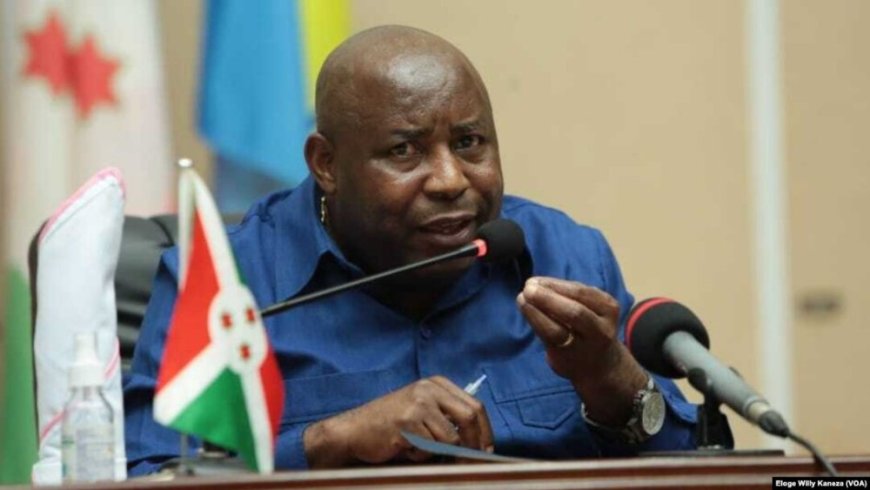
Since last year, President Évariste Ndayishimiye has repeatedly affirmed that Burundi is rich in diverse mineral resources and pledged that this wealth will drive national economic growth. Under his direction, the government has mobilized many young people through the Employment Support Program (PAEEJ), sending them to mountain regions to mine minerals using rudimentary tools such as hoes.

“We have discovered minerals in every province, even in the most remote areas of the south. I recently visited extraction sites, particularly in Isare, where foreigners had already looted copper deposits. No one informed us  they simply shut down the site,” Ndayishimiye said on October 7.

On that same day, the president oversaw the export of 260 tons of amethyst and quartz. Later, on October 27, 175 tons of cassiterite, coltan, and wolfram were also shipped abroad.

Rufyiri, however, remains skeptical about whether these resources will translate into real economic benefit. “Until the expected returns become visible, I will continue to view such declarations as political rhetoric  past experience has made me cautious,” he concluded.

Burundi remains one of the world’s most fragile states in terms of transparency, public management, and good governance. Reports from various civil society organizations highlight that despite the existence of legal frameworks  such as the National Good Governance Strategy  implementation remains weak, particularly since the Ministry of Good Governance was abolished and its supporting structures weakened.
Layla kamanzi Layla Kamanzi is a passionate journalist and creative writer with a keen eye for impactful storytelling. As a Journalism and Mass Communication student at Mount Kenya University, she is dedicated to using words as a tool to inform, inspire, and amplify the voices of everyday people. Driven by curiosity and a love for truth, Layla explores stories that shape communities and spark meaningful conversations. She enjoys blending facts with compelling narratives to create content that educates, empowers, and connects audiences across East Africa and beyond.

Burundi Exports Minerals Worth 26 Billion FBu with No Revenue Recorded, Watchdog Reveals

Oct 31, 2025 - 20:35
 0
Burundi Exports Minerals Worth 26 Billion FBu with No Revenue Recorded, Watchdog Reveals

Burundi’s anti-corruption watchdog OLUCOME has revealed that the country exported minerals valued at over 26 billion Burundian francs last year without any recorded revenue entering the state treasury. Despite President Évariste Ndayishimiye’s promises that the nation’s mineral wealth would drive economic growth, transparency and accountability remain in question as reports highlight widespread mismanagement and weak governance structures.


The president of the Burundian Observatory for the Fight Against Corruption and Economic Malpractice (OLUCOME), Gabriel Rufyiri, has revealed that Burundi exported minerals worth over 26 billion Burundian francs last year  yet not a single franc from those exports was recorded in the state treasury.

“Last year’s budget projected more than 26 billion from mineral revenues. I must tell you, not a single franc reached the state coffers,” Rufyiri said.

According to him, while financial controllers’ reports confirm the absence of mineral revenues in the national accounts, the international market shows clear evidence of large-scale exports of Burundian minerals.

“If you look at the international market in Dubai or elsewhere  you’ll see tons upon tons of gold, coltan, cassiterite, wolfram, and others. The question is: where is the money going?” he asked.

For the 2025 budget, the government expects to collect just 7.7 billion FBu from minerals  a sharp drop from the previous year, with no explanation offered for the decline.

Since last year, President Évariste Ndayishimiye has repeatedly affirmed that Burundi is rich in diverse mineral resources and pledged that this wealth will drive national economic growth. Under his direction, the government has mobilized many young people through the Employment Support Program (PAEEJ), sending them to mountain regions to mine minerals using rudimentary tools such as hoes.

“We have discovered minerals in every province, even in the most remote areas of the south. I recently visited extraction sites, particularly in Isare, where foreigners had already looted copper deposits. No one informed us  they simply shut down the site,” Ndayishimiye said on October 7.

On that same day, the president oversaw the export of 260 tons of amethyst and quartz. Later, on October 27, 175 tons of cassiterite, coltan, and wolfram were also shipped abroad.

Rufyiri, however, remains skeptical about whether these resources will translate into real economic benefit. “Until the expected returns become visible, I will continue to view such declarations as political rhetoric  past experience has made me cautious,” he concluded.

Burundi remains one of the world’s most fragile states in terms of transparency, public management, and good governance. Reports from various civil society organizations highlight that despite the existence of legal frameworks  such as the National Good Governance Strategy  implementation remains weak, particularly since the Ministry of Good Governance was abolished and its supporting structures weakened.