 Kinyarwanda
 English
 Swahili






















Kigali emerges as Africa’s strategic crossroads in a new global security axis
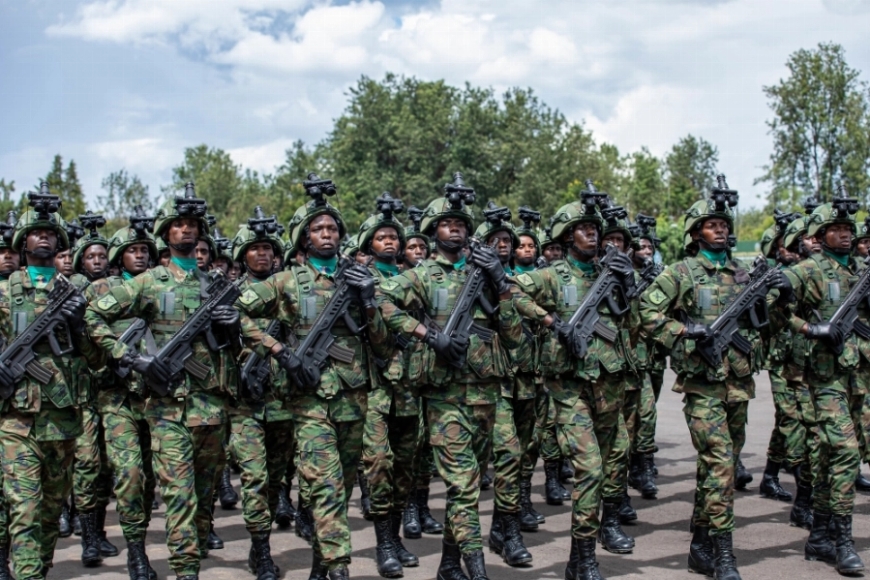
Kigali has become the focal point of a new strategic conversation linking the United States, Israel and Africa around shared security and innovation goals. The summit underscored Rwanda’s ambition to serve as a regional anchor in a broader geopolitical realignment, blending American leadership, Israeli technological expertise and African priorities, while raising questions about how the continent can safeguard its sovereignty within evolving global partnerships.

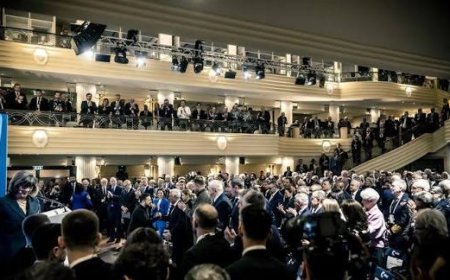
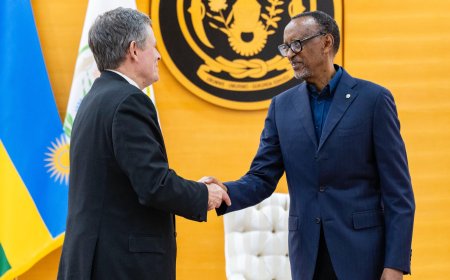
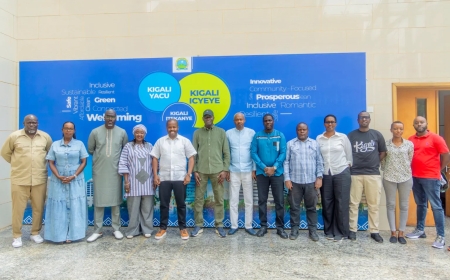
A discreet but strategically significant security summit has taken place in Kigali, bringing together senior policymakers and experts from the United States, Israel and several African countries to explore a new framework of geopolitical cooperation.
Held under the theme “Aligning the United States, Israel, Africa, and the New Middle East,” the meeting sought to reposition Africa within a renewed strategic partnership, building on the long-established alliance between Washington and Tel Aviv. Organisers described the gathering as a step toward integrating Africa more directly into emerging global security and innovation networks, with Rwanda cast as a central regional partner.
According to participants, the envisioned arrangement would draw on complementary strengths: the United States providing geopolitical experience and international leadership; Israel contributing security know-how and technological innovation; and Rwanda acting as a strategic bridge to the wider African continent.
The summit brought together prominent figures from across the U.S. political spectrum, including Republican Senator Ted Cruz, Democratic Senator Jacky Rosen, and Robert C. O’Brien, who served as national security adviser during the administration of former President Donald Trump.
Discussions were organised around four roundtable sessions, focusing on the strategic foundations of a U.S.–Israel–Africa partnership, questions of memory and moral leadership, regional security dynamics, and innovation inspired by Israel’s “Start-Up Nation” model an idea widely associated with Israeli author and analyst Saul Singer.
Unlike many high-profile international conferences, the Kigali meeting was conducted with limited media exposure, reflecting Rwanda’s preference for quiet diplomacy. Officials familiar with the process say the approach aligns with Kigali’s broader strategy, where policy planning and implementation often precede public announcements.
Beyond the immediate outcomes, analysts see the summit as part of a broader shift in global power dynamics. Africa is increasingly being framed not as a peripheral arena for external competition, but as a strategic space in its own right valued for its economic potential, demographic weight and growing relevance to global security.
Rwanda’s role in hosting and shaping the dialogue is consistent with its efforts over the past decade to project itself as a stable, reform-oriented state with strong institutions. By positioning Kigali as a hub for this emerging alignment, Rwandan policymakers appear to be pursuing a pragmatic foreign policy seeking deeper partnerships while maintaining national autonomy.
The reference to a “new Middle East” in the summit’s framing points to a broader geopolitical vision, one that links recent regional realignments and security cooperation in the Middle East with African strategic interests. In this context, security is defined broadly, extending beyond military concerns to include economic resilience, cybersecurity, counter-terrorism and technological development.
However, observers caution that such alignments come with risks. While external partnerships can bring expertise and investment, African states face the challenge of ensuring that cooperation does not translate into dependency or the dilution of local priorities. For many, the key question is whether Africa can shape these partnerships on its own terms.
For now, the Kigali summit may have unfolded away from the global spotlight, but its implications could be far-reaching. As global alliances continue to shift, the discussions held behind closed doors in Rwanda’s capital suggest a growing recognition of Africa as an emerging actor rather than a passive participant in the evolving architecture of international security.
Tags: