
issa
AFC/M23 accuses Kinshasa regime of ceasefire violations and mass atrocities in South Kivu

AFC/M23 accuses Kinshasa regime of ceasefire violations and mass atrocities in South Kivu

Feb 20, 2026 - 07:32
 0

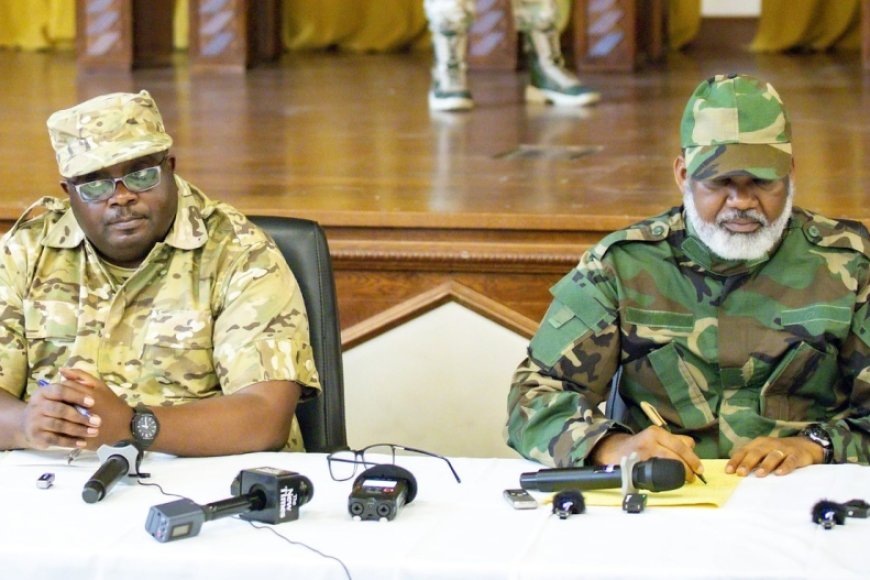
In a February 19, 2026 communiqué issued in Goma, AFC/M23 accused the Kinshasa government and its allied forces of carrying out systematic attacks and massacres against civilians in Minembwe, Mikenge, Karingi and the Hauts Plateaux of South Kivu. The movement alleged serious ceasefire violations under the Doha and Washington agreements and criticized the international community’s silence, warning that continued violence threatens regional stability in the Great Lakes.
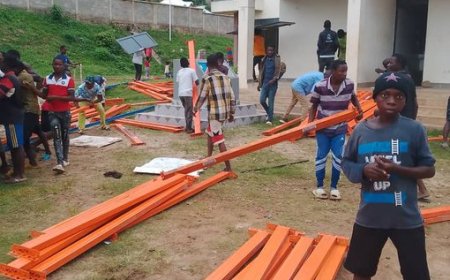


The Alliance Fleuve Congo/Movement of March 23 (AFC/M23) has issued a strong statement condemning what it describes as ongoing massacres of civilians in Minembwe, Mikenge, Karingi and across the Hauts Plateaux of South Kivu.

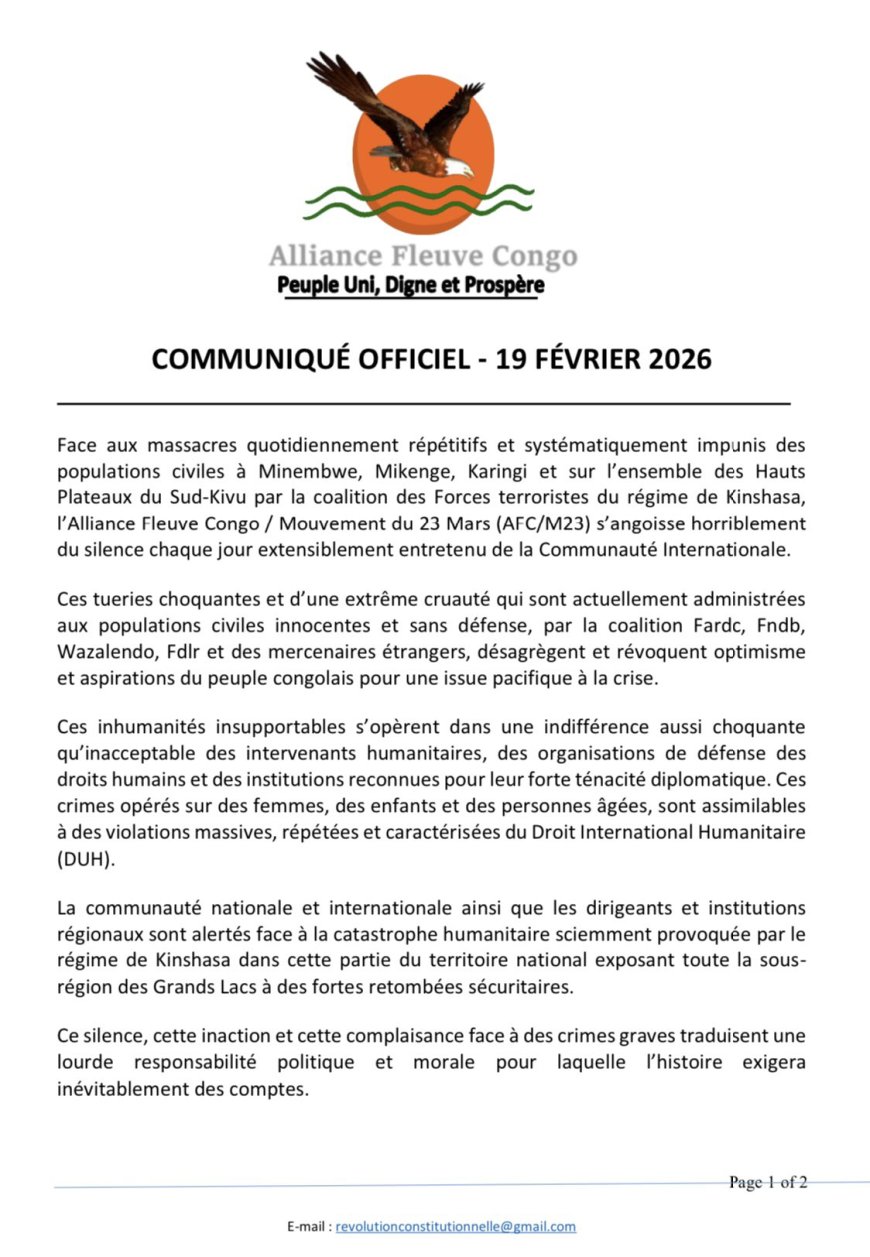
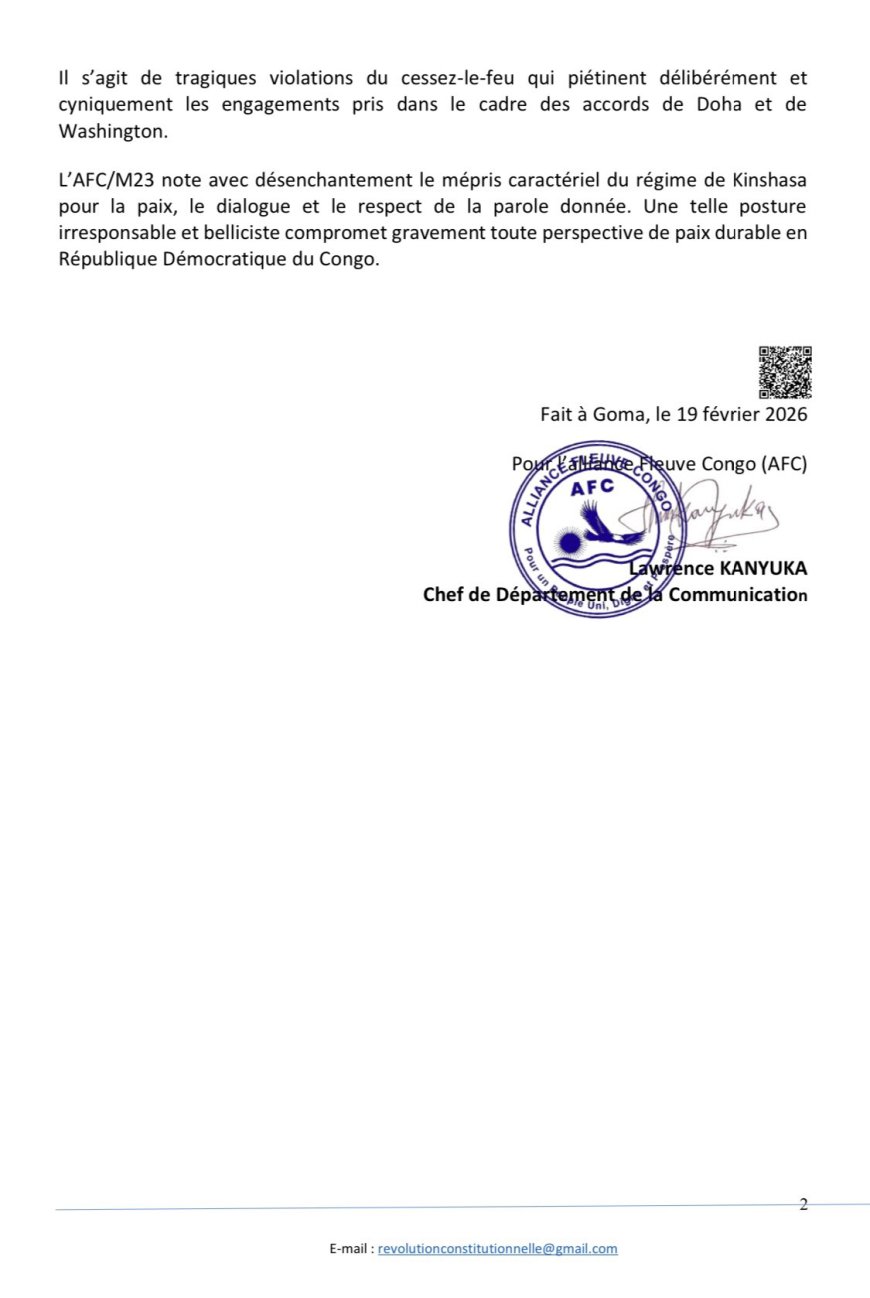
In an official communiqué dated February 19, 2026, and signed in Goma by Lawrence Kanyuka, Head of the Communication Department of AFC, the movement accuses the Kinshasa government and its coalition forces of carrying out systematic attacks against civilian populations. According to the statement, these actions are allegedly being conducted by a coalition comprising FARDC, FND, Wazalendo militias, FDLR elements and foreign mercenaries.

The AFC/M23 claims that the reported killings, which it describes as acts of extreme cruelty, are targeting innocent and defenseless civilians, including women, children and the elderly. The movement argues that such acts amount to serious and repeated violations of international humanitarian law.

In its communiqué, the group also criticizes what it calls the silence and inaction of the international community, humanitarian actors and human rights organizations. It states that the lack of response to the alleged atrocities reflects political and moral responsibility that “history will inevitably judge.”

The statement further asserts that the ongoing violence constitutes deliberate violations of the ceasefire agreements reached under the Doha and Washington frameworks. AFC/M23 accuses the Kinshasa regime of disregarding commitments related to peace, dialogue and respect for signed agreements, warning that such actions compromise prospects for a sustainable peace in the Democratic Republic of the Congo.

The movement calls on national, regional and international leaders to take urgent action in response to what it describes as a worsening humanitarian catastrophe in eastern DRC. It warns that continued instability in South Kivu could have broader security repercussions across the Great Lakes region.

The situation in eastern Democratic Republic of the Congo remains tense, with various armed actors active in the region and repeated accusations exchanged between the government and rebel movements regarding ceasefire violations and civilian harm.
Layla kamanzi Layla Kamanzi is a passionate journalist and creative writer with a keen eye for impactful storytelling. As a Journalism and Mass Communication student at Mount Kenya University, she is dedicated to using words as a tool to inform, inspire, and amplify the voices of everyday people. Driven by curiosity and a love for truth, Layla explores stories that shape communities and spark meaningful conversations. She enjoys blending facts with compelling narratives to create content that educates, empowers, and connects audiences across East Africa and beyond.

AFC/M23 accuses Kinshasa regime of ceasefire violations and mass atrocities in South Kivu

Feb 20, 2026 - 07:32
 0
AFC/M23 accuses Kinshasa regime of ceasefire violations and mass atrocities in South Kivu

In a February 19, 2026 communiqué issued in Goma, AFC/M23 accused the Kinshasa government and its allied forces of carrying out systematic attacks and massacres against civilians in Minembwe, Mikenge, Karingi and the Hauts Plateaux of South Kivu. The movement alleged serious ceasefire violations under the Doha and Washington agreements and criticized the international community’s silence, warning that continued violence threatens regional stability in the Great Lakes.


The Alliance Fleuve Congo/Movement of March 23 (AFC/M23) has issued a strong statement condemning what it describes as ongoing massacres of civilians in Minembwe, Mikenge, Karingi and across the Hauts Plateaux of South Kivu.

In an official communiqué dated February 19, 2026, and signed in Goma by Lawrence Kanyuka, Head of the Communication Department of AFC, the movement accuses the Kinshasa government and its coalition forces of carrying out systematic attacks against civilian populations. According to the statement, these actions are allegedly being conducted by a coalition comprising FARDC, FND, Wazalendo militias, FDLR elements and foreign mercenaries.

The AFC/M23 claims that the reported killings, which it describes as acts of extreme cruelty, are targeting innocent and defenseless civilians, including women, children and the elderly. The movement argues that such acts amount to serious and repeated violations of international humanitarian law.

In its communiqué, the group also criticizes what it calls the silence and inaction of the international community, humanitarian actors and human rights organizations. It states that the lack of response to the alleged atrocities reflects political and moral responsibility that “history will inevitably judge.”

The statement further asserts that the ongoing violence constitutes deliberate violations of the ceasefire agreements reached under the Doha and Washington frameworks. AFC/M23 accuses the Kinshasa regime of disregarding commitments related to peace, dialogue and respect for signed agreements, warning that such actions compromise prospects for a sustainable peace in the Democratic Republic of the Congo.

The movement calls on national, regional and international leaders to take urgent action in response to what it describes as a worsening humanitarian catastrophe in eastern DRC. It warns that continued instability in South Kivu could have broader security repercussions across the Great Lakes region.

The situation in eastern Democratic Republic of the Congo remains tense, with various armed actors active in the region and repeated accusations exchanged between the government and rebel movements regarding ceasefire violations and civilian harm.